
10124Bexar County Stormwater Permit Compliance 2026: Complete GuidePro SWPPP – America’s #1 SWPPP Service helps builders across Bexar County skip the headache of stormwater permits every single day. If you’re planning to move dirt on one acre or more in 2026, you’re probably wondering: “Do I need a permit? How do I stay legal? And how do I avoid fines?” The answer is simple – yes, you need a permit, and this guide will walk you through exactly how to comply without losing your mind or your money.
Why Bexar County Has Stormwater Rules
Back in 1972, Congress passed the Clean Water Act to protect rivers, lakes, and groundwater from pollution. When rain washes over construction sites, it picks up dirt, oil, chemicals, and trash, dumping all that junk into local waterways. In Bexar County, that’s a big deal because the Edwards Aquifer sits right underneath – the drinking water source for millions of people. The Texas Commission on Environmental Quality (TCEQ) runs the state’s NPDES stormwater program under permit TXR150000. Bexar County adds its own layer of rules for unincorporated areas to keep runoff clean during and after construction. If you ignore these rules, you risk stop-work orders, fines up to $25,000 per day, and a reputation nobody wants.Which Projects Need a Bexar County Stormwater Permit?
You need a Post-Construction Storm Water Control Measure Permit if your project disturbs one acre or more in unincorporated Bexar County. You also need it if you disturb less than one acre but you’re part of a larger common plan that totals one acre or more. Think subdivisions, shopping centers, or phased developments. During construction, you’ll need a Storm Water Quality Site Development Permit to manage runoff while you’re moving dirt. Both permits work hand-in-hand with TCEQ’s Construction General Permit TXR150000, which requires a Stormwater Pollution Prevention Plan (SWPPP) and either a Notice of Intent (NOI) or Small Site Notice filed at least 48 hours before you start work.
Understanding Impervious Cover Targets
Bexar County sets limits on how much of your site can be covered by concrete, asphalt, roofs, and other hard surfaces. These “impervious cover” thresholds vary by project type:- Single-family residential: 30%
- Multi-family residential: 50%
- Commercial or industrial: 65%
- Transportation projects: 85%
Step-by-Step: Pre-Construction Compliance in 2026
Before you can break ground, follow these steps to get your Bexar County stormwater permit approved:1. Prepare Your Application Package
Gather a signed application form, mitigation scoring sheet, Best Management Practices (BMPs) calculations, design drawings, and a site location map. If your site is over the Edwards Aquifer, include your WPAP or CZP approval letter from TCEQ. You’ll also need any required tree permits.2. Submit Fees
Pay $50 for the application fee and $200 for the review fee (total $250). Edwards Aquifer sites skip the $200 review fee, so you only pay $50.3. Wait for Review
Bexar County has 30 days to review your submission. They’ll check your BMP designs, drainage calculations, and compliance with TCEQ rules. If something’s missing or wrong, they’ll ask for revisions.4. Get Approval Before Construction
You must receive written approval before you start any land disturbance. Remember, other county permits from Development Services may also apply – the stormwater permit alone doesn’t give you the green light to start digging. Don’t want to mess with all the paperwork and requirements? Check out Order your SWPPP now with Pro SWPPP Professional CPESC Certified SWPPP Services.During Construction: SWPPP and Site Inspections
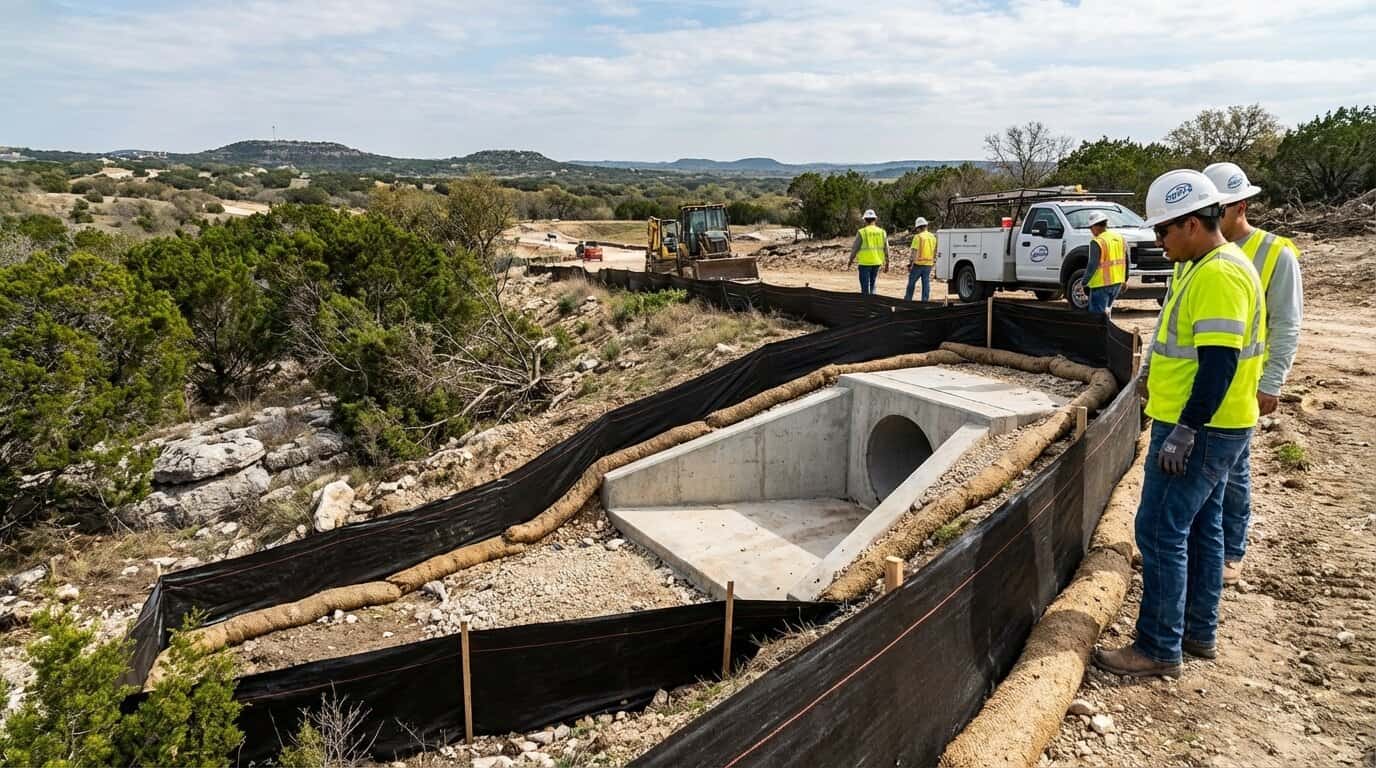
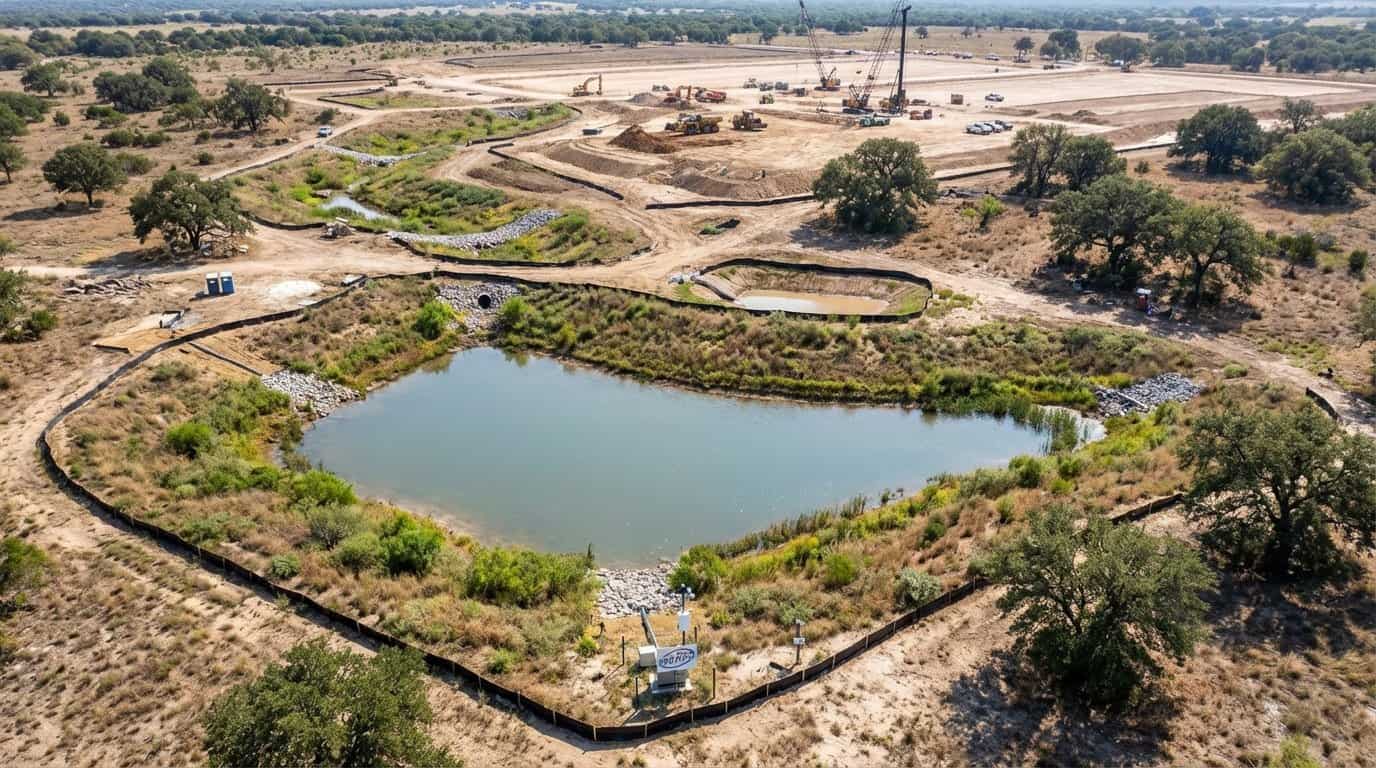
Once you start work, you’ll operate under both Bexar County rules and TCEQ’s Construction General Permit TXR150000. That means you need a Stormwater Pollution Prevention Plan (SWPPP) on-site at all times. Your SWPPP describes how you’ll control erosion and sediment using BMPs like silt fences, rock check dams, sediment basins, and stabilized construction entrances. You must inspect your site weekly and within 24 hours after any rain event that drops half an inch or more. Document every inspection in writing and store records for at least three years. TCEQ and Bexar County can show up unannounced to verify your BMPs are working and your paperwork is current.
Erosion Control and Sediment Control Basics
Erosion Control keeps soil in place so rain can’t wash it away. Common practices include mulching, seeding, erosion control blankets, and temporary or permanent vegetation. Sediment Control captures dirt that’s already moving, using barriers like silt fences, wattles, sediment traps, and basins. Your SWPPP must include both types of controls. Pro SWPPP – America’s #1 SWPPP Service designs site-specific plans that meet TCEQ and Bexar County standards, so you don’t have to guess which BMPs to use or where to place them. For example, a five-acre residential subdivision in unincorporated Texas might use perimeter silt fencing, a temporary sediment basin at the low point, stabilized construction access onto the main road, and hydroseed on slopes steeper than 3:1. Each BMP gets sized based on your site’s drainage area, soil type, and expected rainfall intensity.Post-Construction: Closing Your Permit
After you finish grading and your permanent BMPs are stabilized, you can’t just walk away. Bexar County requires a formal closeout process:- Submit as-built design drawings showing final BMP locations and dimensions
- Provide a licensed engineer’s certification that BMPs were built according to approved plans
- Record a maintenance affidavit with the county clerk, binding future property owners to ongoing maintenance
- Hire a certified maintenance provider and submit their contact information
- Pass a final site inspection by county staff