10306Concrete Washout Area SWPPP Requirements: Compliance Guide 2026Pro SWPPP – America’s #1 SWPPP Service gets one question more than any other: “Do I really need a concrete washout area on my construction site?” If you’re pouring concrete in 2026 and you disturb soil, the short answer is YES. But let’s break down exactly what that means, why it matters, and how to stay out of trouble with regulators who love issuing fines.
Concrete washout isn’t just some box you check on a form. It’s a critical Best Management Practice (BMP) under the Clean Water Act and the NPDES Construction General Permit (CGP). When concrete trucks clean their chutes or workers rinse tools, that waste carries high pH, heavy metals, and sediment. If it runs into a storm drain or stream, you’re polluting waters of the United States. The EPA and state agencies like TCEQ in Texas take that seriously. Fines start at thousands of dollars per day. So yes, you need a plan.
What Is a Concrete Washout Area?
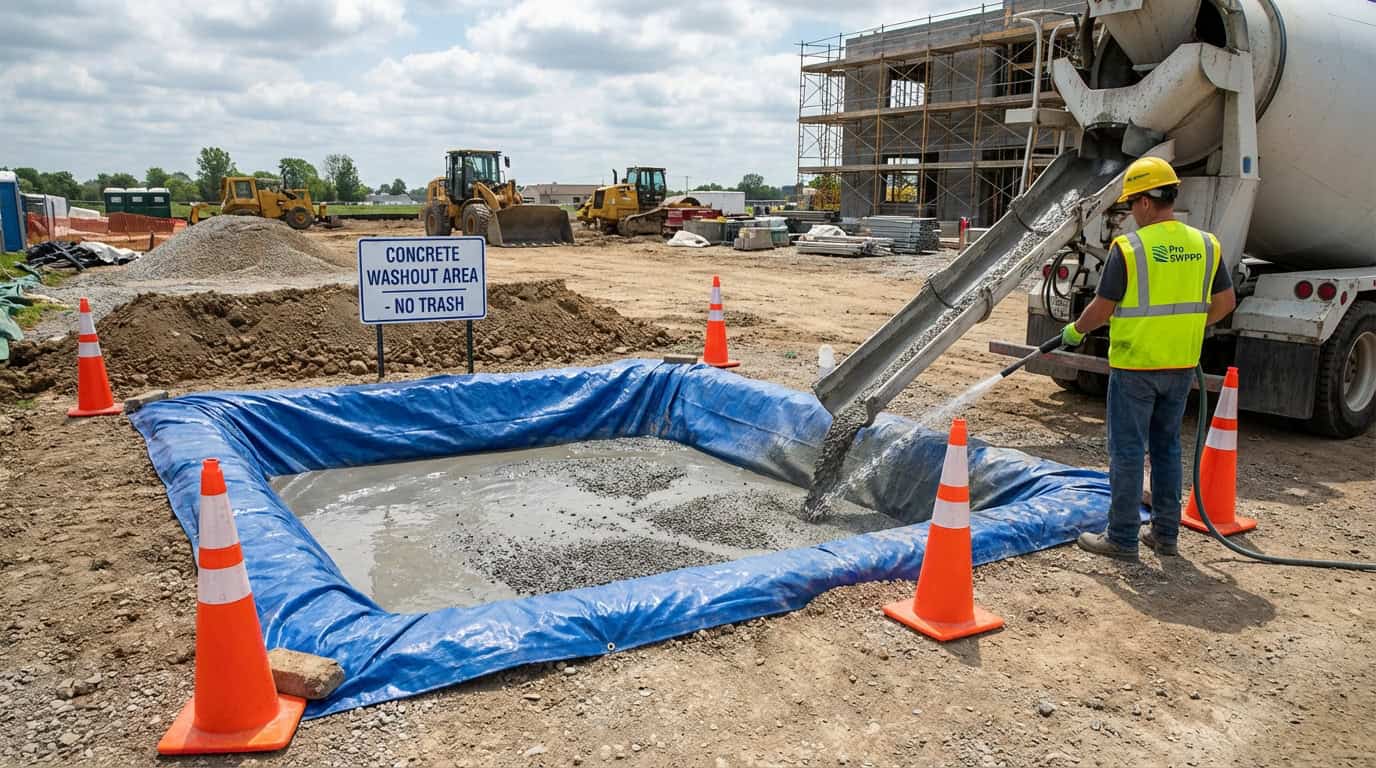
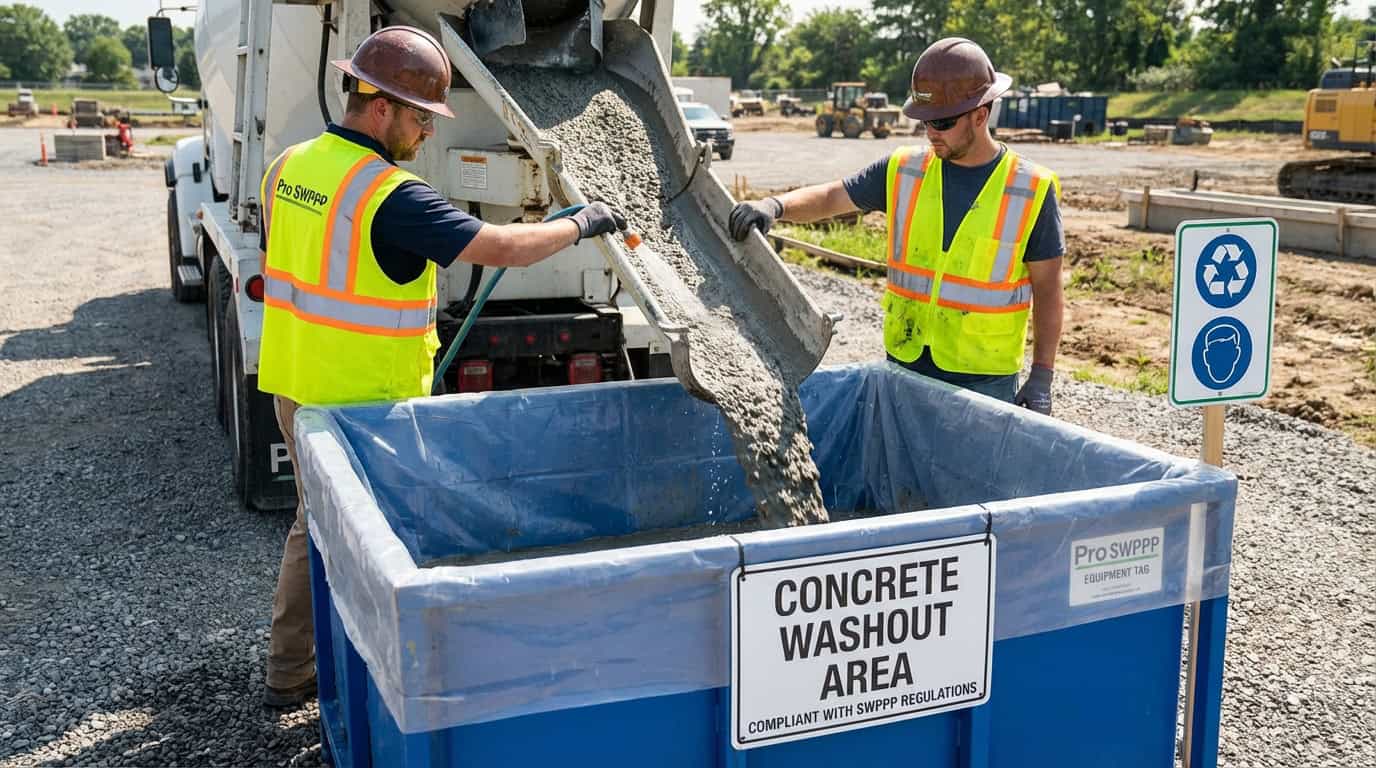
A concrete washout area is a designated spot on your site where trucks and crews dump leftover concrete slurry, rinse water, and tool wash. It’s usually a lined pit or portable containment bin that keeps the nasty stuff from touching bare ground or running off into stormwater systems. Think of it as a diaper for concrete waste. You wouldn’t let a baby crawl around without one, and you can’t let concrete waste roam free on a construction site either. Under the CGP, every SWPPP must include procedures for managing concrete waste. That means your SWPPP document needs to show where washout areas go, how you’ll mark them, how often you’ll clean them out, and who’s responsible. If inspectors show up and you don’t have a washout area – or worse, they find concrete dumped on the ground – you’re looking at violations, stop-work orders, and expensive cleanup.
Why the Rules Got Stricter in 2026
States like California rolled out updated CGP rules in September 2023 that tightened pH sampling, turbidity monitoring, and zero-tolerance trash policies. Virginia consolidated its Erosion and Stormwater Regulation on July 1, 2024, requiring certified Responsible Land Disturbers and site-specific BMPs for every project one acre or larger. Even if your state hasn’t published new rules this year, enforcement is ramping up everywhere. Inspectors are trained to spot concrete violations because they’re easy to document and hard to argue against. Pro SWPPP – America’s #1 SWPPP Service stays on top of these changes so you don’t have to. Our CPESC-certified pros write SWPPPs that include compliant concrete washout plans, complete with site maps, BMP details, and maintenance schedules. We know exactly what regulators want to see because we speak their language.When You Must Have a Concrete Washout Area
If you’re doing any of the following, you need a washout area in your SWPPP:- Pouring foundations, slabs, or driveways on a site that disturbs one acre or more
- Using ready-mix concrete trucks that need to rinse chutes on-site
- Cleaning tools, forms, or equipment with water after concrete work
- Operating under a NPDES Construction General Permit or state equivalent
How to Set Up a Compliant Washout Area
Here’s the step-by-step that keeps you legal and inspectors happy:- Location: Place washout areas at least 50 feet from storm drains, streams, wetlands, or slopes. Choose flat ground that’s easy for trucks to access.
- Size: One washout station per concrete pour day is the rule of thumb. Big projects may need two or three.
- Containment: Use a lined pit (minimum 6-mil plastic liner) or prefab washout box. The liner must cover the bottom and sides to prevent seepage.
- Signage: Mark every washout area with a sign that says “Concrete Washout – Do Not Dump Anywhere Else.”
- Maintenance: Inspect daily during active concrete work. Pump out or remove hardened waste before it overflows. Replace liners when damaged.
- Documentation: Log every inspection, cleanout, and disposal. Keep receipts from concrete recycling or landfill disposal.
Common Mistakes That Cost You Money
We see the same errors over and over when crews try to DIY their concrete washout:- No liner: Dumping concrete on bare dirt is an instant violation. Concrete has a pH above 12, which kills aquatic life and violates water quality standards.
- Too close to water: If your washout sits ten feet from a creek, you’re asking for a Notice of Violation. Keep that 50-foot buffer.
- Overflow: Letting a washout pit fill to the brim and spill over is the same as dumping concrete on the ground. Clean it out before it’s full.
- No sign: Crews will rinse anywhere if you don’t tell them where to go. Signs are cheap insurance.
- Missing paperwork: If you can’t prove you maintained the washout, inspectors assume you didn’t. Take photos and keep logs.
State-Specific Twists You Need to Know
Every state adds its own flavor to federal CGP rules. In Texas, TCEQ requires SWPPPs to include detailed pollution prevention plans, and concrete washout is a standard BMP. In Georgia, the EPD expects washout areas to appear on your site map with GPS coordinates. California’s updated CGP mandates pH sampling for runoff, so if your washout overflows, you’re testing that water for compliance. Virginia’s consolidated rules require a Qualified Stormwater Manager to verify BMP installation, including washout stations. Pro SWPPP – America’s #1 SWPPP Service knows these state twists inside and out. Our team writes SWPPPs that pass first-time inspections in all 50 states because we tailor every plan to local regulations. You get site-specific BMPs, accurate calculations, and compliant documentation – no guesswork.Why CPESC Certification Matters for Your SWPPP
The EPA recognizes CPESC (Certified Professional in Erosion and Sediment Control) as the gold standard for SWPPP preparation. CPESC pros pass rigorous exams, maintain ethics standards, and complete eight hours of professional development every year. When you hire Pro SWPPP – America’s #1 SWPPP Service, you get a CPESC-certified expert who understands Erosion Control, Sediment Control, and Best Management Practices at a level DIY templates can’t match. California and Virginia allow non-traditional QSDs and QSPs, but that doesn’t mean you should cut corners. EnviroCert, the body behind CPESC, is launching a new CPWPC certification by mid-2026 to address broader water pollution control issues like PFAS and TMDL compliance. As rules tighten, having a certified pro on your side is the smartest move.What Happens If You Skip the Washout Area
Let’s be blunt: skipping a concrete washout area is a gamble you’ll lose. Here’s what happens when inspectors catch you:- Stop-work order: They shut down your site until you fix the violation.
- Fines: Federal penalties start at $10,000 per day. State fines vary but add up fast.
- Corrective action: You’ll pay for soil removal, water testing, and habitat restoration if contamination reaches a stream.
- Reputation damage: Violations go on public record. Future permit applications get extra scrutiny.