10085Industrial SWPPP for Auto Salvage: 2026 Compliance RequirementsPro SWPPP – America’s #1 SWPPP Service helps auto salvage facilities stay compliant with stormwater rules. If you run a junkyard or auto recycling yard, the EPA and your state want to know how you’re keeping oil, metals, and fluids out of the rain drains. That means you need a SWPPP – a plan that shows what you do to stop pollution from leaving your property when it rains.
Here’s the thing: most auto salvage owners have no idea they need this plan until an inspector shows up. Then it’s scrambling time. Or worse, you get hit with fines before you even knew the rule existed. This guide walks you through everything – what a SWPPP is, who needs one, what’s changing in 2026, and how to get yours without the headache.
What Is a SWPPP and Why Do Auto Salvage Facilities Need One?
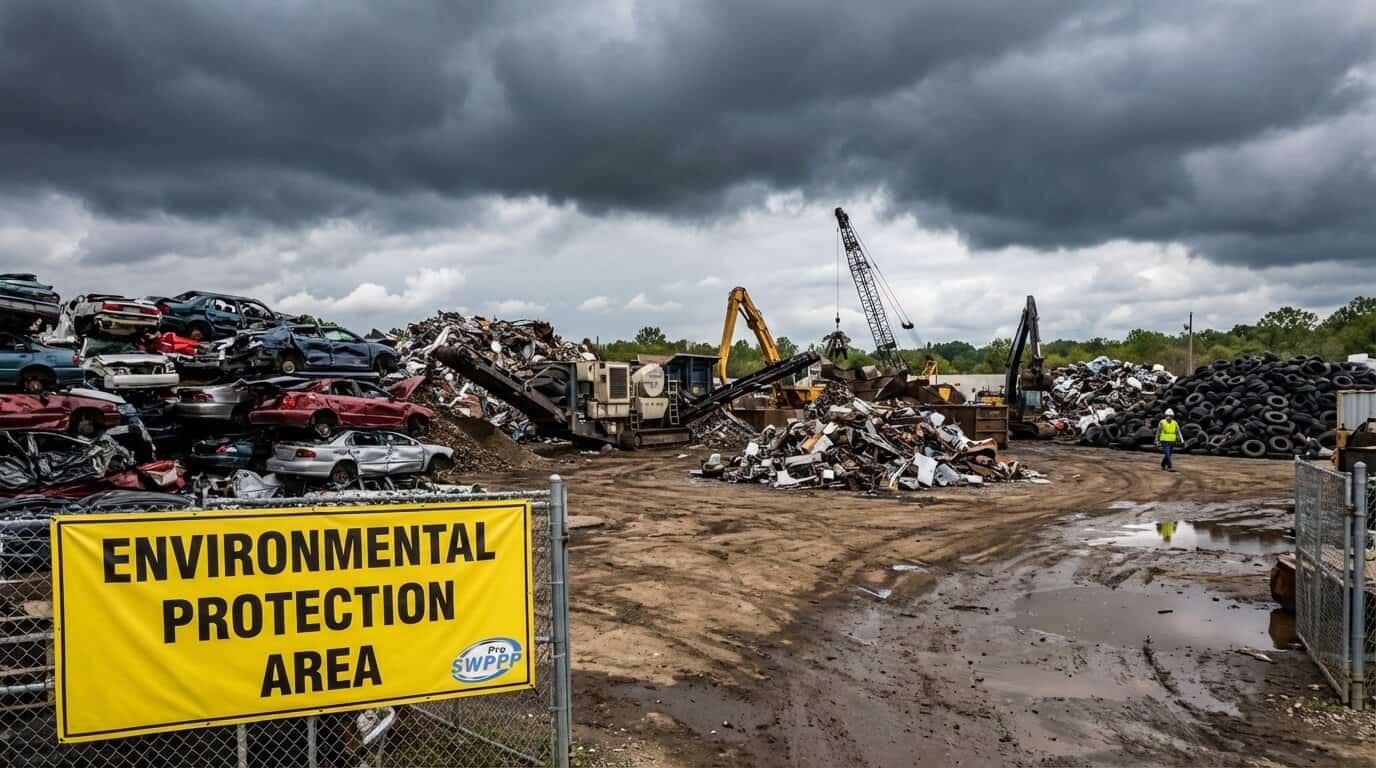
SWPPP stands for Stormwater Pollution Prevention Plan. It’s a written document that explains how your facility will manage rainwater runoff. When rain hits your yard, it can pick up oil, coolant, battery acid, rust, and metal shavings. All that gross stuff flows into storm drains, then straight into rivers and lakes. The Clean Water Act says you can’t do that. Auto salvage facilities fall under Sector M of the EPA’s Multi-Sector General Permit (MSGP). That’s the federal rulebook for industrial stormwater. If you store cars, crush them, pull parts, or drain fluids outside, you’re an industrial activity. That means you need a SWPPP and a permit called a Notice of Intent (NOI). States like Texas and Georgia run their own versions of the MSGP. In Texas, TCEQ calls it the Texas Pollutant Discharge Elimination System (TPDES) MSGP. Your SWPPP there is called a SWP3. Same idea, different name. You still need the plan, the NOI, and regular inspections.Do You Need a SWPPP or Just an NOI?
You need both. The NOI is your application to be covered under the general permit. The SWPPP is your site-specific plan. Think of it this way: the NOI is like signing up for the permit, and the SWPPP is the actual homework you do to stay compliant. Some facilities qualify for a No Exposure Certification (NEC) instead. That means all your industrial materials are completely covered – no exposure to rain or snow at all. If you can prove that, you file the NEC and skip the full MSGP. But here’s the catch: one loose battery or open drum voids your NEC. Then you need the full SWPPP and NOI within 30 days. Most auto salvage yards can’t claim no exposure. Cars sit outside. You drain fluids in the open. You stack parts in the weather. That means you’re covered under the MSGP, and you need a SWPPP.
What’s in a SWPPP for Auto Salvage Facilities?
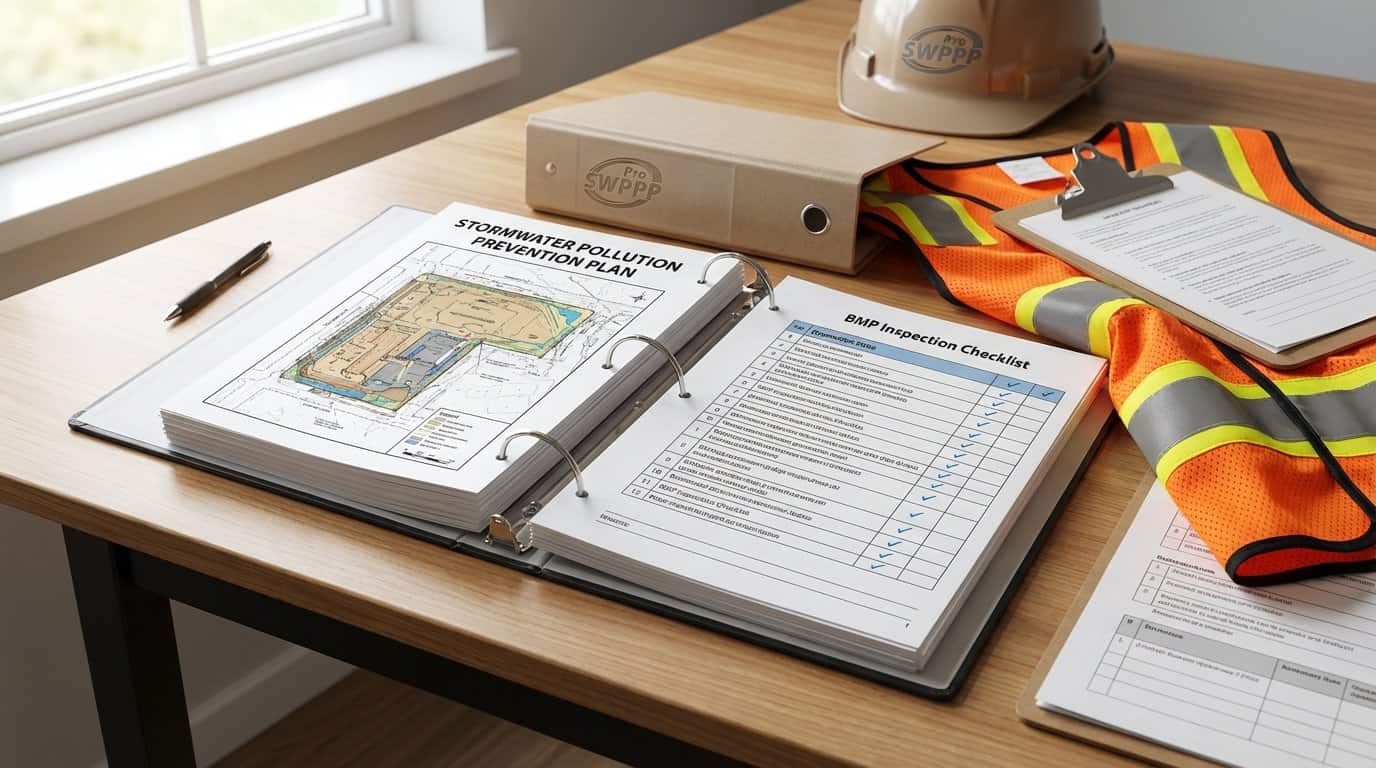
Your SWPPP has to include a site map, a list of pollutants, and a description of Best Management Practices (BMPs). BMPs are the controls you put in place to stop pollution. For auto salvage, that usually means:- Covering fluid-draining areas with a roof or tarp
- Using drip pans and spill kits
- Installing berms or barriers to keep runoff away from storm drains
- Sweeping up metal shavings and debris before it rains
- Storing batteries and drums on pallets under cover
- Directing clean rainwater away from industrial areas
What’s Changing in 2026?
The EPA is reissuing the MSGP in 2026. The current permit expires in February, so a new one is coming. The draft version includes some big changes for Sector M auto salvage facilities. First, there’s new PFAS monitoring. PFAS stands for per- and polyfluoroalkyl substances. They’re chemicals that stick around forever in the environment. The EPA wants auto salvage and scrap recycling facilities to test for 40 different PFAS compounds using EPA Method 1633. You’ll do this quarterly starting in year one of your permit coverage. Here’s the kicker: there are no benchmark levels for PFAS yet. If you detect any amount, you have to review your SWPPP and look for ways to reduce it. You document everything in your annual report. Second, the new permit tightens up the corrective action process. If you have a benchmark exceedance, you now have 7 days to inspect your site and update your SWPPP. You also have to report all triggering events within 14 days. The 2021 permit gave you more wiggle room. Third, the new permit adds language about climate resilience. Your BMPs need to handle bigger storms and more intense rain events. That means designing berms, drainage, and covers that won’t fail when a downpour hits. States will adopt these changes after the EPA finalizes the 2026 MSGP. Texas TCEQ is already drafting its updated version. If you’re covered under a state permit, expect similar requirements to roll out in 2026 or early 2027. Don’t want to mess with all the paperwork and requirements? Check out Order your SWPPP now with Pro SWPPP Professional CPESC Certified SWPPP Services.Common Mistakes Auto Salvage Facilities Make
Mistake one: thinking you don’t need a permit because you’re small. Size doesn’t matter. If you’re in Sector M and you discharge stormwater, you need coverage. Mistake two: assuming your parking lot or office area counts. The NPDES only cares about industrial activity areas. Your front office parking lot doesn’t need a SWPPP unless industrial materials are stored there. Mistake three: filing an NOI but never writing the SWPPP. The NOI is step one. The plan is required. Inspectors will ask to see it. If you don’t have one, you’re out of compliance. Mistake four: letting your SWPPP sit in a drawer. You have to follow it. If your plan says you’ll sweep the yard weekly and you don’t, that’s a violation. Keep records of inspections, monitoring, and maintenance. Mistake five: not updating the SWPPP when you change operations. If you start crushing cars or add a new storage area, update the plan. Your SWPPP has to match what’s happening on the ground.