10138Montana SWPPP Requirements: Complete 2026 Compliance GuidePro SWPPP – America’s #1 SWPPP Service knows this truth: most Montana contractors get slapped with fines not because they wanted to pollute, but because they didn’t know the rules. You’re grading a lot, rain hits, mud flows into a creek, and boom—$83,500 penalty just like that developer who forgot his paperwork. Montana doesn’t mess around with stormwater rules in 2026, and neither should you.
Here’s the deal. If you’re moving dirt in Montana—building homes, roads, parking lots, anything—you probably need a Storm Water Pollution Prevention Plan (SWPPP) and a Notice of Intent (NOI). The state wants to keep sediment, concrete wash, fuel spills, and other junk out of rivers and streams. The Clean Water Act makes this a federal law, but Montana runs its own show through the Department of Environmental Quality (DEQ).
Let’s cut through the confusion and show you exactly what you need, when you need it, and how to stay out of trouble.
 You submit your NOI and SWPPP before you break ground. Not after. Not during. Before. DEQ has to receive your complete package before you start moving dirt. Coverage kicks in the moment they get it, as long as everything is correct.
 Montana also wants you to manage other pollutants. Concrete washout areas must be lined and labeled. Fuel and chemical storage needs secondary containment. Trash and construction waste stay in covered dumpsters. All of this goes in your SWPPP as specific BMPs.
You must keep your permit and SWPPP on-site at all times. Inspectors can show up anytime and ask to see it. If you don’t have it, that’s a violation right there.
Montana also wants you to manage other pollutants. Concrete washout areas must be lined and labeled. Fuel and chemical storage needs secondary containment. Trash and construction waste stay in covered dumpsters. All of this goes in your SWPPP as specific BMPs.
You must keep your permit and SWPPP on-site at all times. Inspectors can show up anytime and ask to see it. If you don’t have it, that’s a violation right there.
Do You Need a SWPPP in Montana?
Simple answer: if you’re disturbing one acre or more of land, you need coverage under the Montana Storm Water Construction General Permit (permit number MTR100000). That means clearing, grading, excavating, or any activity that could send polluted runoff into surface waters. Here’s what counts as one acre: a building site, a subdivision lot, a road extension. But watch out—if you’re part of a larger common plan like a 20-lot subdivision, even your half-acre lot counts toward the total. If the whole project is over one acre, every contractor on site needs coverage. The National Pollutant Discharge Elimination System (NPDES) program under the Clean Water Act requires this. Montana took over from the EPA, so you deal with DEQ, not Washington.
You submit your NOI and SWPPP before you break ground. Not after. Not during. Before. DEQ has to receive your complete package before you start moving dirt. Coverage kicks in the moment they get it, as long as everything is correct.
What Goes in a Montana SWPPP?
Your SWPPP is the game plan for keeping pollutants on your site. It’s not a stack of paperwork you ignore—it’s your instruction manual. Montana requires it to include:- Site assessment: topography, where water runs, nearby streams or lakes
- Pollutant sources: sediment from bare soil, concrete truck washout, fuel storage, dust from grading
- Best Management Practices (BMPs): silt fences, sediment basins, inlet protection, vehicle tracking pads, dust control
- Stabilization plan: seed and mulch, erosion blankets, when you’ll cover exposed dirt
- Inspection schedule: who checks the site, how often, what they look for
The Notice of Intent (NOI) Process
Your NOI is the formal request for permit coverage. You can’t just email DEQ a note. You submit through their FACTS e-permitting system. The complete NOI package includes:- The NOI form with site details and operator info
- A site map showing property boundaries and nearby waters
- Your SWPPP with all maps and BMPs
- A Greater Sage Grouse letter if your site is in certain counties
- The permit fee
Construction Site BMPs You Can’t Skip
Erosion Control and Sediment Control are the two pillars of your SWPPP. Erosion Control stops soil from moving in the first place. Sediment Control catches it if it does move. You need both. Erosion Control includes:- Preserving existing vegetation where possible
- Seeding and mulching graded areas within 14 days
- Using erosion blankets on slopes
- Minimizing the time soil sits exposed
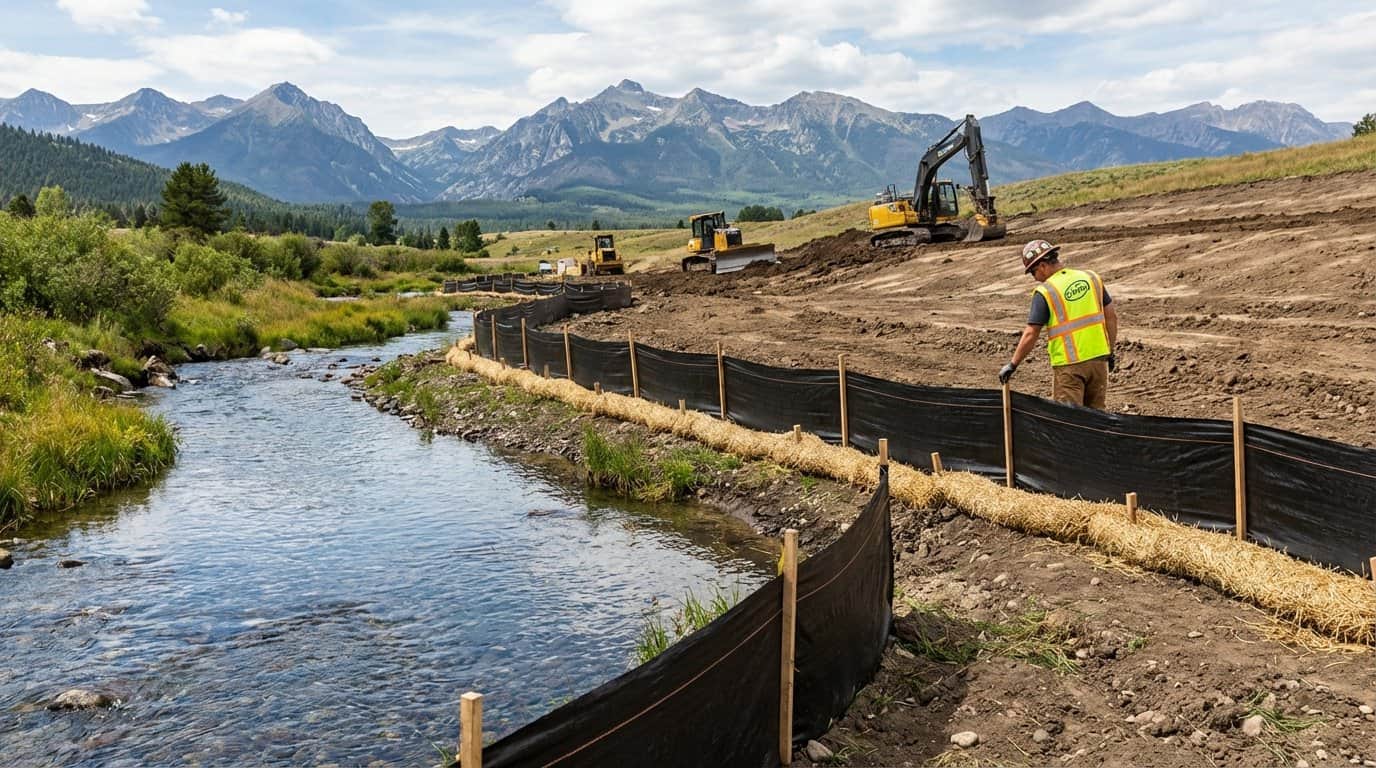
- Silt fences along the downhill edge of your site
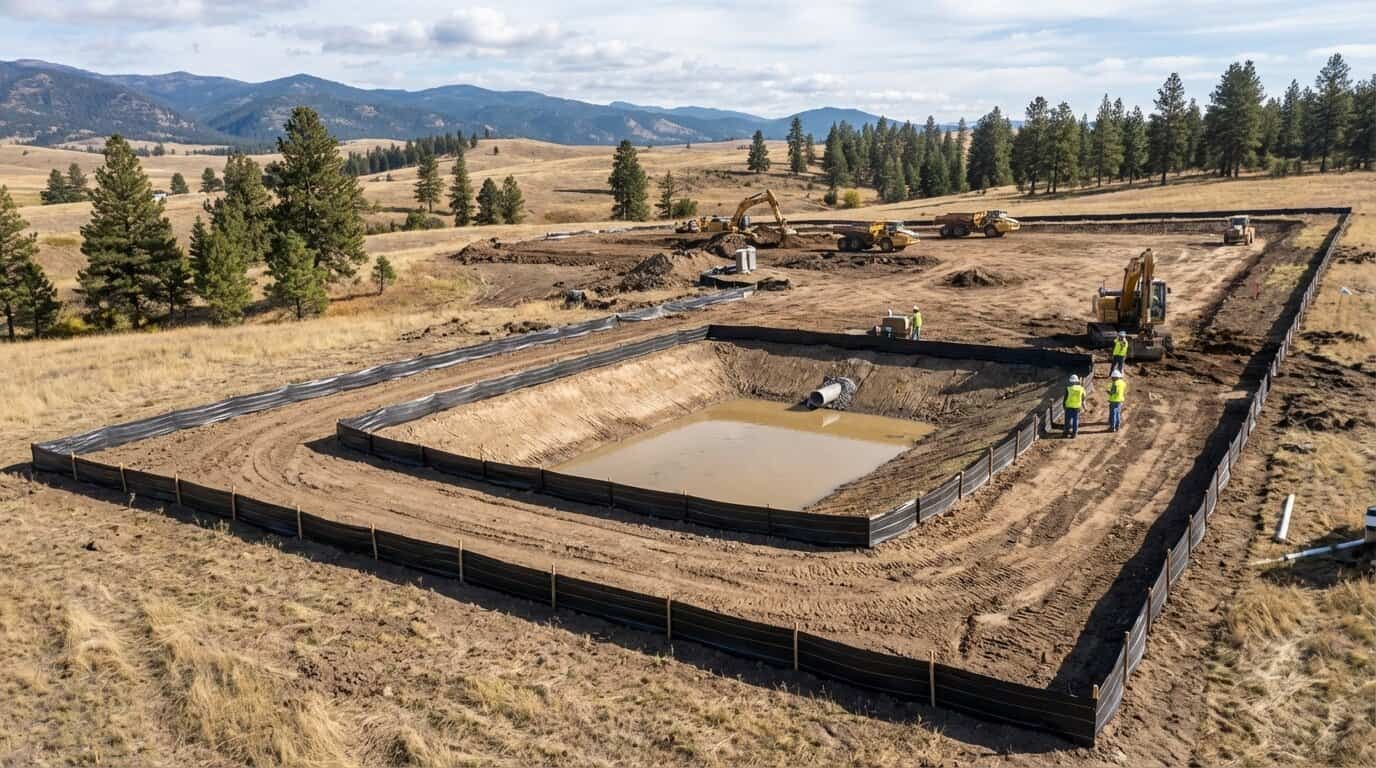
- Sediment basins to capture runoff before it leaves
- Inlet protection around storm drains
- Rock construction entrances to knock mud off tires
Montana also wants you to manage other pollutants. Concrete washout areas must be lined and labeled. Fuel and chemical storage needs secondary containment. Trash and construction waste stay in covered dumpsters. All of this goes in your SWPPP as specific BMPs.
You must keep your permit and SWPPP on-site at all times. Inspectors can show up anytime and ask to see it. If you don’t have it, that’s a violation right there.