9903Complete Guide for SWPPP Requirements in New York 2026Pro SWPPP – America’s #1 SWPPP Service helps construction teams across New York stop worrying about stormwater compliance and start building faster. If you’re breaking ground in New York, you need to know whether your project requires a SWPPP, an NOI, or both. Get it wrong and your project stops cold. Get it right and you keep building while staying legal.
What Is a SWPPP and Why Does New York Care?
A Stormwater Pollution Prevention Plan (SWPPP) is your roadmap to keeping dirt, chemicals, and other pollutants out of New York’s rivers, lakes, and streams. The state and city both require it because dirty stormwater kills fish, ruins drinking water, and damages ecosystems. The Clean Water Act makes this a federal law. The NPDES program enforces it. In New York, the Department of Environmental Conservation (NYSDEC) runs the show for most of the state. If you’re in New York City, the Department of Environmental Protection (DEP) adds extra rules on top. Think of your SWPPP like a game plan for rain. When it rains on your construction site, where does the water go? What does it pick up on the way? How do you stop it from carrying mud and trash into the nearest creek? Your SWPPP answers all that.
Who Needs a SWPPP in New York?
You need a SWPPP if your construction project disturbs one acre or more of soil. That’s the basic rule across the country. But New York has special rules that kick in even sooner. In New York City, you need a SWPPP if your project involves two or more acres of land clearing or grading within 100 feet of a stream or wetland, or within 300 feet of a reservoir. You also need one if your project sits on a slope near protected water. The city takes watershed protection seriously because millions of people drink that water. New York State issues a General Permit for Stormwater Discharges from Construction Activity. That permit number is GP-0-15-002. It covers projects that disturb an acre or more. Once you have your SWPPP ready, you file a Notice of Intent to get covered under that permit.What Is an NOI and When Do You Need One?
The Notice of Intent (NOI) is your application to the state. It tells NYSDEC you’re starting a construction project and you have a SWPPP ready to go. You submit the NOI through the state’s online portal after your SWPPP is complete. You cannot start construction until your NOI is approved. That’s the rule. No NOI means no legal work. If inspectors show up and you don’t have coverage, they shut you down and hand you fines. For industrial facilities like factories or warehouses that discharge stormwater, New York also has a Multi-Sector General Permit (MSGP). The current permit number is GP-0-23-001, issued in March 2023. Industrial sites need their own NOI and SWPPP to stay covered. Don’t want to mess with all the paperwork and requirements? Check out Order your SWPPP now with Pro SWPPP Professional CPESC Certified SWPPP Services.What Goes Into a New York SWPPP?
Your SWPPP must be site-specific. That means cookie-cutter templates don’t work. Every site has different slopes, soils, water features, and weather patterns. Your plan needs to match your dirt. Here’s what every New York SWPPP includes:- Site map showing where water flows and where you’ll disturb soil
- Best Management Practices (BMPs) you’ll use to control erosion and sediment
- Inspection schedule and who does the inspections
- Maintenance plan for your erosion control measures
- Contact information for the person responsible for the SWPPP
- Calculations showing post-construction runoff won’t exceed pre-construction levels
Best Management Practices That Work in New York
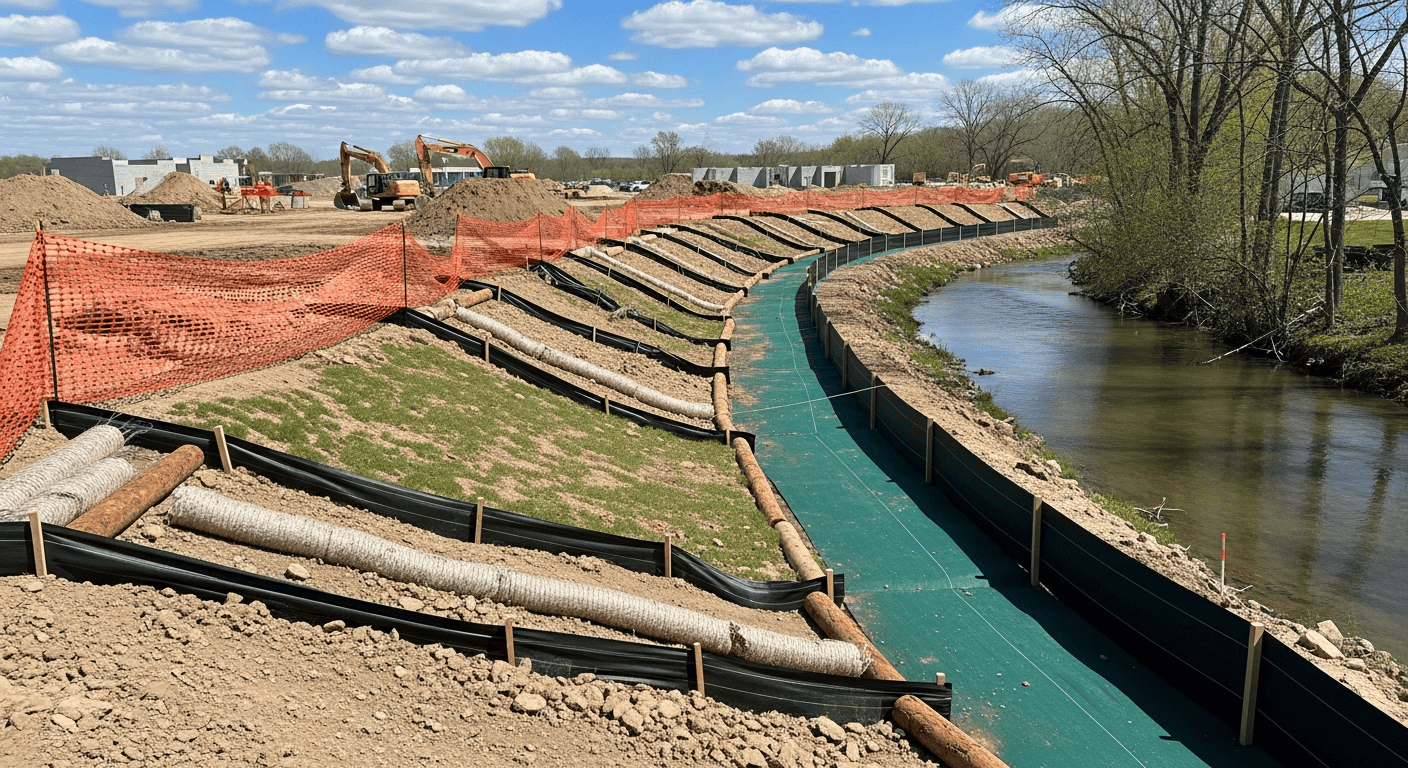
Best Management Practices (BMPs) are the physical tools you use to stop pollution. Think silt fences, sediment basins, and stabilized construction entrances. Your SWPPP lists which BMPs you’ll use and where you’ll put them. Erosion Control BMPs stop soil from moving in the first place. These include:- Seeding and mulching exposed soil
- Erosion control blankets on steep slopes
- Temporary or permanent ground cover
- Diversion berms to redirect water away from bare dirt
- Silt fences along the downslope edge of your site
- Sediment traps and basins to collect muddy water
- Check dams in drainage swales
- Construction entrance pads to keep mud off the road
NYC Has Extra Rules You Need to Know
New York City adds requirements on top of what the state demands. The city manages a massive watershed that supplies drinking water to millions of people, so they’re stricter about stormwater. NYC requires that your post-development runoff rate can’t exceed your pre-development rate for both the 10-year and 100-year 24-hour storms. That means you need detailed hydrologic modeling before and after construction. You’ll use approved software and probably hire a hydrologist who knows the NYC Stormwater Manual. The city also requires an assessment of impervious cover. That’s any surface water can’t soak through – driveways, roofs, sidewalks, parking lots. You need to calculate how much impervious area you’re adding and show how you’ll manage the extra runoff. If your project is near a reservoir, stream, or wetland, expect even more scrutiny. The city may require buffer zones, enhanced filtration, or special BMPs to protect sensitive water bodies.Inspections and Monitoring Keep You Legal
Getting your SWPPP approved is just the start. Staying legal means regular inspections and monitoring. New York requires inspections every seven days and within 24 hours after any storm that produces 0.5 inches of rain or more. Your inspector checks that BMPs are installed correctly and working. Are silt fences still standing? Are sediment basins full and need cleaning? Is mulch still covering bare soil? The inspector documents everything and notes repairs needed. For industrial sites under the MSGP, you’ll do stormwater sampling, visual monitoring, annual site evaluations, and dry weather inspections. You’ll submit Discharge Monitoring Reports to NYSDEC showing your stormwater quality meets permit limits. Keep all inspection reports, lab results, and maintenance records. NYSDEC can ask to see them anytime. If you don’t have records, you don’t have proof of compliance. Pro SWPPP offers inspection services to keep your project compliant from groundbreaking to final stabilization. We train your crew, conduct inspections, and handle all the reporting so you can focus on building.How to Close Out Your Construction SWPPP
You can’t just finish building and walk away. Your SWPPP stays active until the site is fully stabilized and all permanent stormwater controls are installed and working. Before you file a Notice of Termination (NOT), you need to check these boxes:- No exposed soil remains – everything is paved, planted, or covered
- Grass areas show at least 80 percent germination
- All permanent stormwater management practices are built per plan
- All temporary erosion controls are removed
- No more construction will disturb the site
- Operation and maintenance procedures for permanent BMPs are given to the owner