10210Texas SWPPP Requirements: Complete 2026 Compliance GuideYou’re about to break ground on a construction project in Texas. The dirt’s ready. The machines are lined up. Then someone asks: “Do you have your SWPPP?” And you freeze. Pro SWPPP – America’s #1 SWPPP Service is here to clear up the confusion so you can get back to building.
Here’s the truth: if you disturb one acre or more of land in Texas, you need a Stormwater Pollution Prevention Plan. It’s not optional. It’s the law. And skipping it can cost you thousands in fines, shut down your site, and wreck your reputation.
This guide walks you through every Texas SWPPP requirement for 2026. You’ll learn what you need, when you need it, and how to stay compliant without losing your mind.
What Is a SWPPP and Why Does Texas Require It?
A SWPPP is a written plan that shows how you’ll stop dirt, mud, and pollutants from washing off your construction site into rivers, lakes, and streams. Think of it as your playbook for keeping stormwater clean. The Clean Water Act requires it. The EPA enforces it through the NPDES permit program. In Texas, the TCEQ handles the rules. When you disturb soil, rain turns your site into a muddy mess. That mud carries chemicals, trash, and sediment into the water supply. The SWPPP stops that from happening. Without a SWPPP, you’re breaking federal law. Fines start at $10,000 per day. Repeat offenders can face criminal charges. Texas doesn’t mess around with stormwater compliance.
Who Needs a SWPPP in Texas?
If your construction project disturbs one acre or more, you need a SWPPP. That includes:- New building construction
- Road and highway projects
- Pipeline and utility work
- Land clearing and grading
- Demolition sites
- Any project that’s part of a larger common plan of development
What’s an NOI and Do You Need One?
An NOI is a Notice of Intent. It’s a form you file with the TCEQ to get coverage under the Construction General Permit. You can’t start work until your NOI is approved and you have permit coverage. Here’s the order:- Create your SWPPP
- File your NOI with the TCEQ
- Wait for permit coverage
- Start construction
Key Components of a Texas SWPPP
Your SWPPP must include specific sections to meet TCEQ and EPA requirements. Here’s what goes in it:Site Description
Maps, photos, and details about your project. Show where you’ll disturb soil, where stormwater flows, and where it leaves your site. Identify any nearby streams, wetlands, or sensitive areas.Best Management Practices
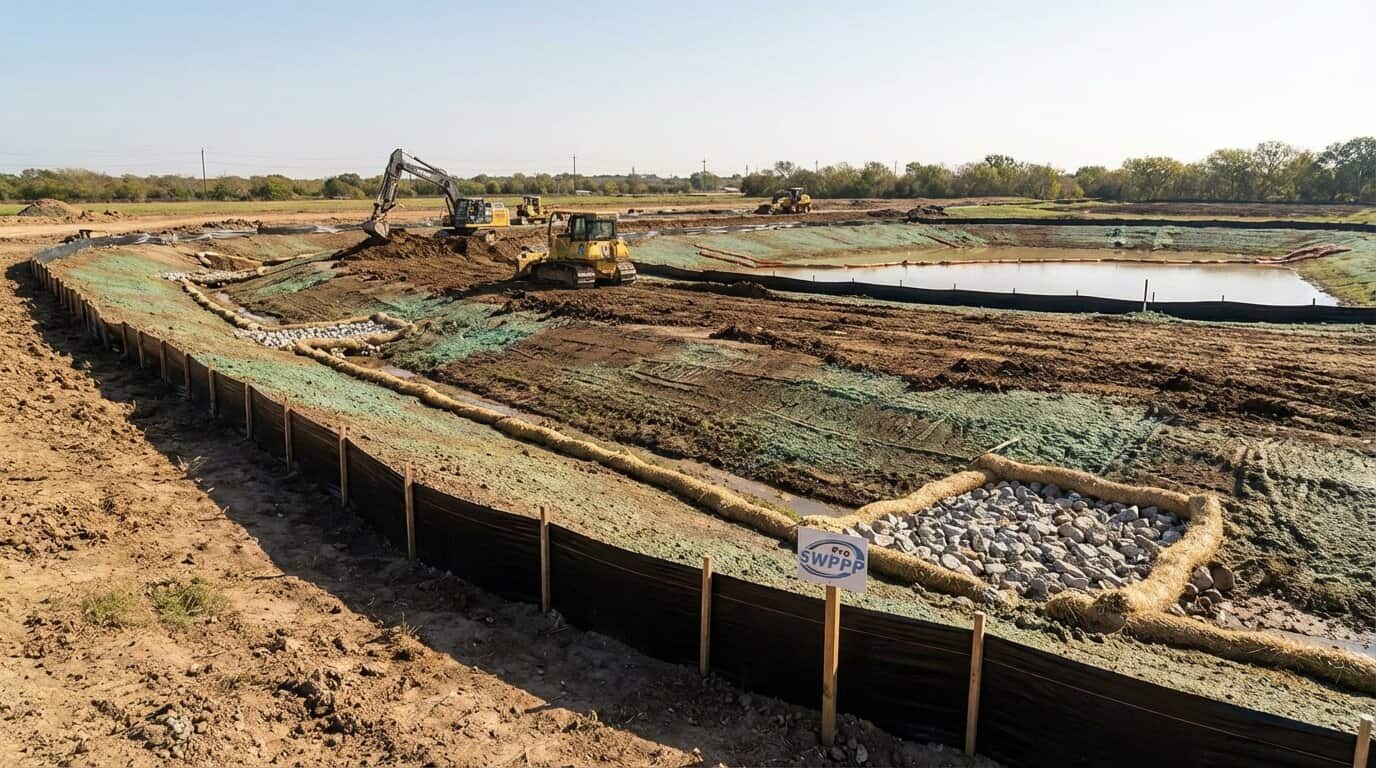
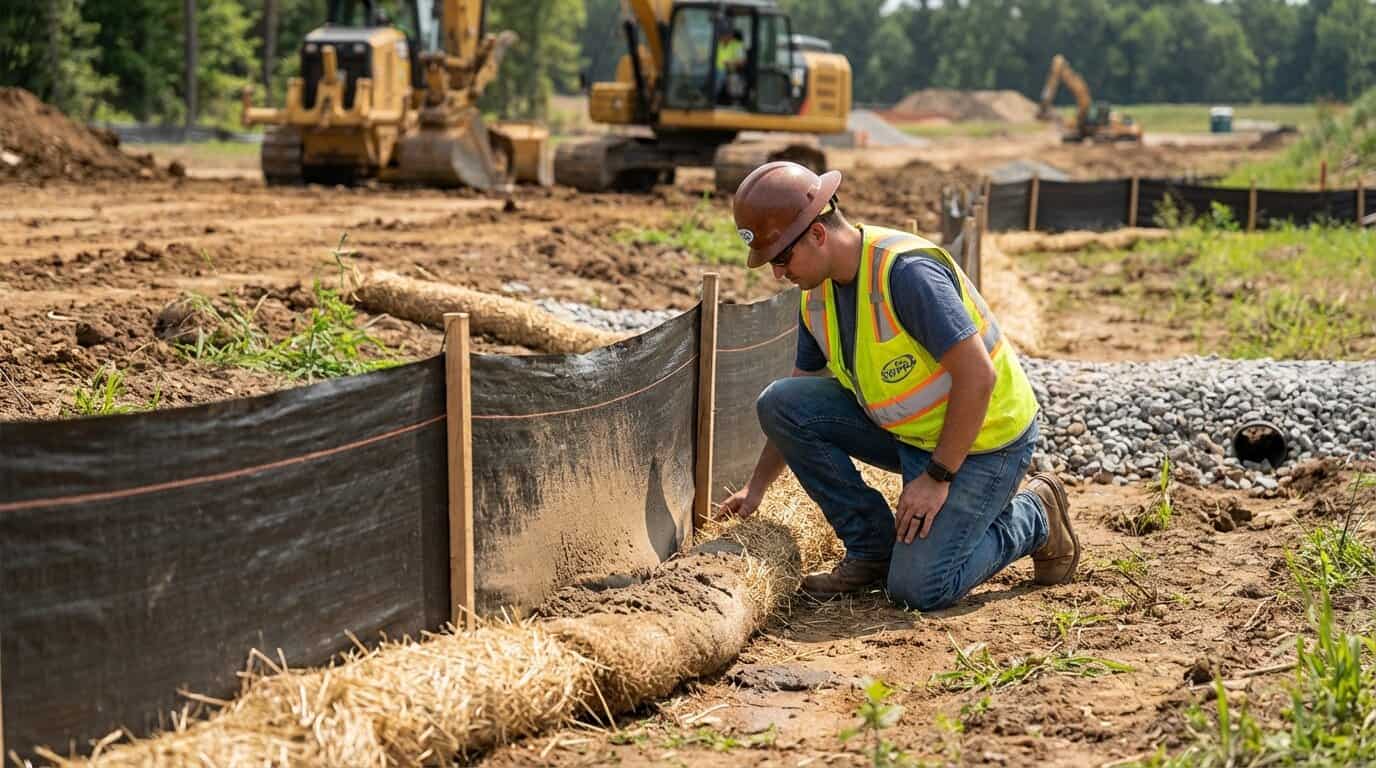
BMPs are the tools and methods you’ll use to control erosion and sediment. Common BMPs include:- Silt fences
- Sediment basins
- Inlet protection
- Stabilized construction entrances
- Temporary seeding or mulch
- Rock check dams
Inspection and Maintenance Schedule
You can’t just install BMPs and forget them. Texas requires weekly inspections and inspections within 24 hours of any storm that produces half an inch of rain or more. Document every inspection in writing. If a silt fence rips or a basin fills with mud, fix it fast. The TCEQ wants proof you’re staying on top of maintenance.Spill Prevention and Response
If you store fuel, oil, or chemicals on site, your SWPPP must explain how you’ll prevent spills and what you’ll do if one happens. Simple stuff: use secondary containment, keep spill kits handy, and train your crew.Qualified Personnel
Texas requires a trained professional to prepare your SWPPP and conduct inspections. Many companies hire a CPESC-certified expert. Pro SWPPP – America’s #1 SWPPP Service provides CPESC-certified professionals who know Texas rules inside and out.Common Mistakes That Lead to Violations
Most violations happen because of simple errors. Here’s what to avoid:Starting Work Before Filing Your NOI
This is the fastest way to get fined. File your NOI before you move dirt. No exceptions.Skipping Inspections
Weekly inspections are required. Miss them and you’re in trouble. Keep a logbook on site with dates, weather conditions, and any issues you found.Ignoring Maintenance
A torn silt fence doesn’t count as a BMP. Fix problems immediately. The TCEQ checks your maintenance records during audits.Using a Cookie-Cutter Plan
Every site is different. A plan that worked in Georgia won’t fit a Texas project. Your SWPPP must be site-specific, with accurate maps and BMPs that match your soil, slope, and weather.Forgetting the NOT
When your project wraps up, you must file a Notice of Termination to close out your permit. Leaving it open can cause problems down the road. Not sure what your project needs? Take our SWPPP Quiz or Schedule a Free SWPPP Consultation with CPESC Certified SWPPP Expert Derek E. Chinners.How Pro SWPPP Makes Texas Compliance Easy
Pro SWPPP – America’s #1 SWPPP Service takes the stress out of stormwater compliance. We handle everything from start to finish:- Custom SWPPP creation for your Texas project
- NOI filing with the TCEQ
- Inspection scheduling and documentation
- BMP recommendations and installation support
- Permit closeout and NOT filing