10236Virginia SWPPP Requirements: 2026 Compliance Guide for ContractorsPro SWPPP – America’s #1 SWPPP Service helps thousands of contractors cut through the confusion every single year. Here’s the truth: most people who start a construction project in Virginia have no idea whether they need a SWPPP, an NOI, or both. And that confusion costs them time, money, and sometimes massive fines.
If you’re planning to disturb one acre or more of soil in Virginia, the Clean Water Act requires you to get a permit. That permit is called the NPDES Construction General Permit (CGP). And to get that permit, you need two things: a Stormwater Pollution Prevention Plan (SWPPP) and a Notice of Intent (NOI).
Let’s break this down so a fourth-grader could understand it.
 Here’s what makes Virginia different from states like Texas or Georgia: Virginia uses the Virginia Pollutant Discharge Elimination System (VPDES) permit program. The rules are coded in 9VAC25-151-80, and they just got updated in January 2026. The state tightened the inspection timelines and added new requirements for waste container management.
 Beyond fines, you can be issued a stop-work order. That means your crew sits idle, your equipment sits idle, and you’re still paying for everything while making zero progress. It’s the fastest way to blow a budget and miss a deadline.
What Is a SWPPP?
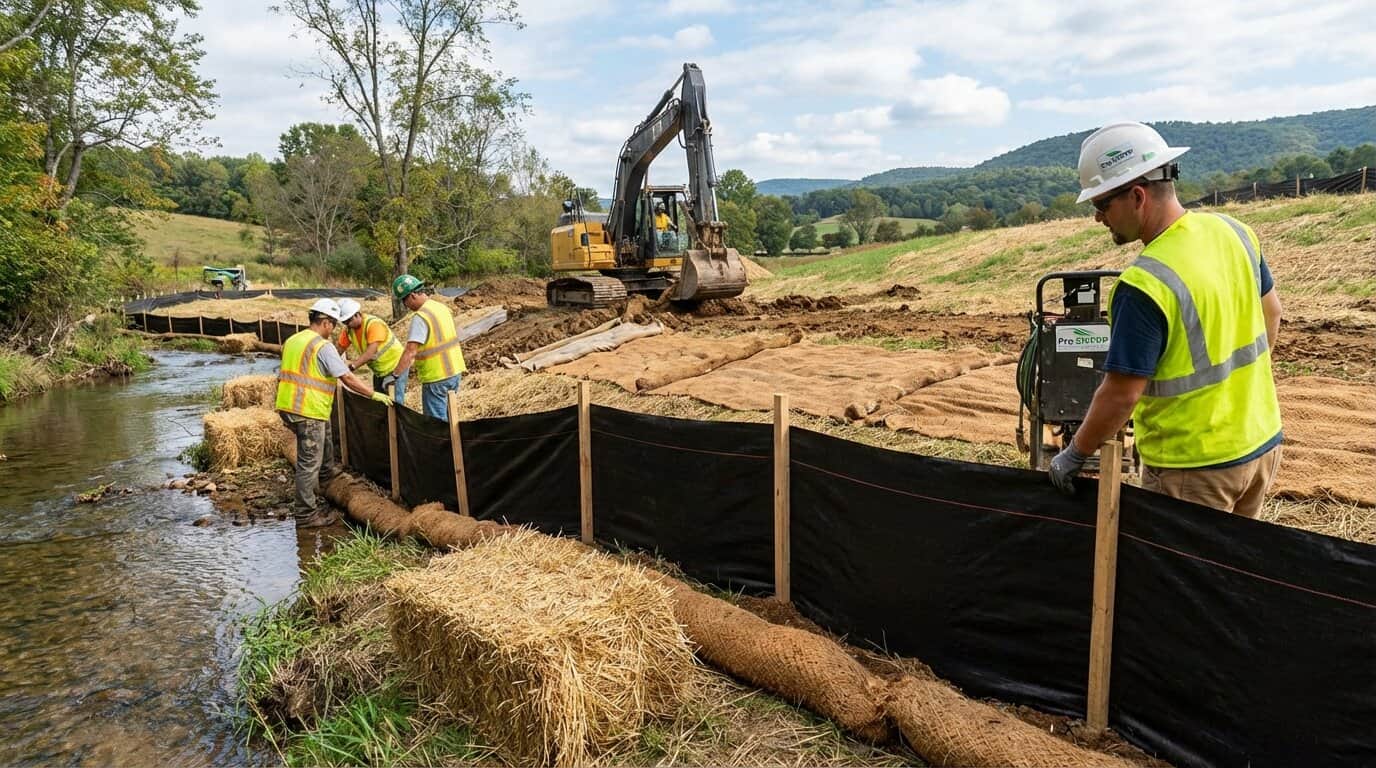
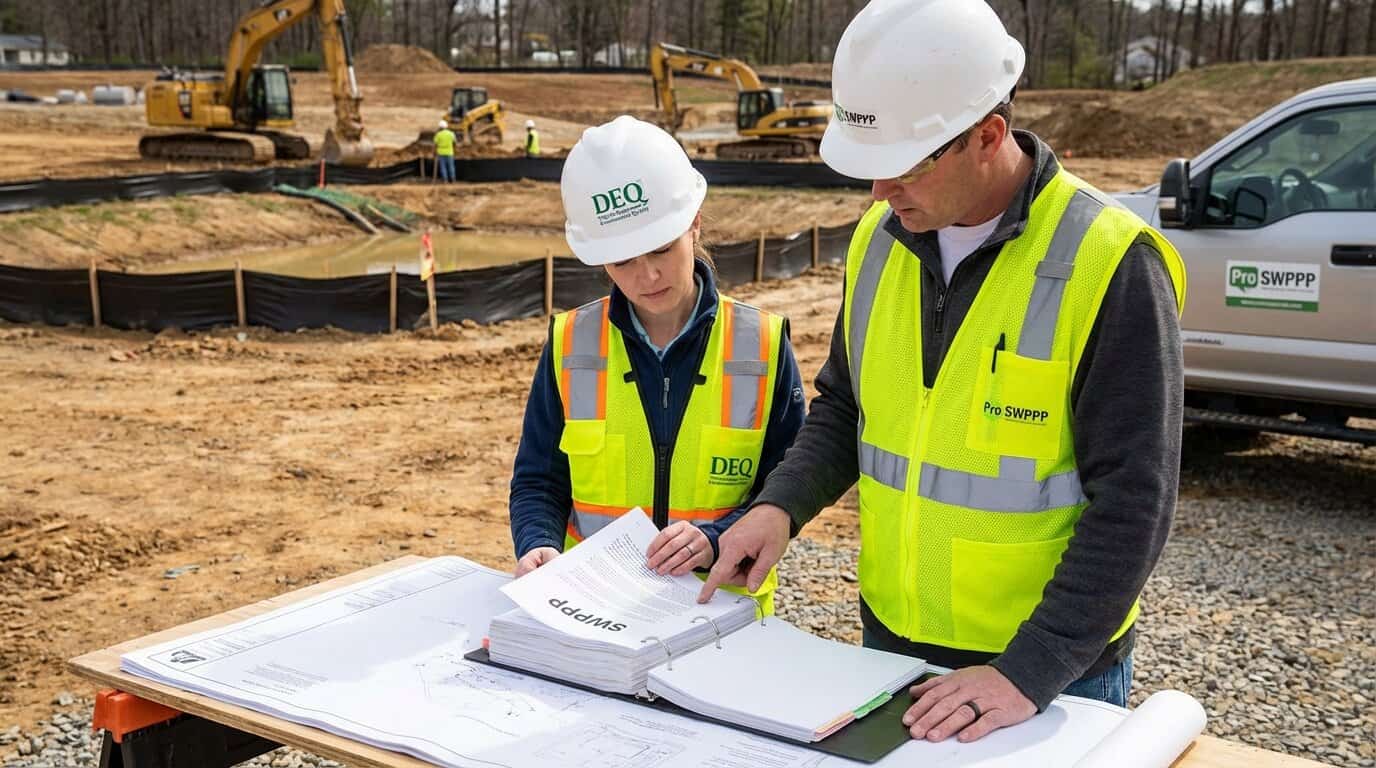
A SWPPP is your written game plan. It shows how you’re going to keep dirt, chemicals, and trash from washing into streams, rivers, and lakes during construction. Think of it like a recipe that tells you exactly what to do to protect water quality. Your SWPPP must include a site map, a list of all the stuff you’re storing on site, your Best Management Practices (BMPs), your Erosion Control plan, and your Sediment Control measures. It also needs inspection schedules and a plan for what happens when it rains. Virginia requires your SWPPP to be ready before you submit your NOI. If you’re a new facility or you don’t have a current permit, you must finish your SWPPP before you even send in your registration statement. If you’re continuing from an old permit, you get 90 days after coverage is granted.
Here’s what makes Virginia different from states like Texas or Georgia: Virginia uses the Virginia Pollutant Discharge Elimination System (VPDES) permit program. The rules are coded in 9VAC25-151-80, and they just got updated in January 2026. The state tightened the inspection timelines and added new requirements for waste container management.
What Is an NOI?
An NOI is your formal request for permit coverage. It’s a form you fill out that says, “Hey, I’m about to start construction, and here’s my plan to keep stormwater clean.” You can’t legally start dirt work until your NOI is approved and you have permit coverage. The NOI tells the Virginia Department of Environmental Quality (DEQ) who you are, where your site is, what kind of work you’re doing, and when you plan to start. It also confirms that you have a SWPPP ready to go. So the short answer is: you need both. The SWPPP is your plan. The NOI is your permission slip.When Do You Need These Documents in Virginia?
If your project disturbs one acre or more, you need a SWPPP and an NOI. That’s the federal threshold under the Clean Water Act. Even if you’re only disturbing 0.9 acres but you’re part of a larger common plan of development that totals one acre or more, you still need coverage. Virginia also requires coverage for smaller sites in certain cases. If your site is near sensitive waters or if local ordinances are stricter, you might need a permit even for sites under one acre. Don’t want to mess with all the paperwork and requirements? Check out Order your SWPPP now with Pro SWPPP Professional CPESC Certified SWPPP Services.What Happens If You Skip the SWPPP or NOI?
Short answer: bad things. The EPA and Virginia DEQ can fine you up to $55,808 per day per violation. That’s not a typo. Every single day you operate without a permit is a separate violation. I’ve seen contractors get hit with six-figure fines because they thought they could “just start digging” and deal with permits later. One guy in Virginia started grading without an NOI and got slapped with a $120,000 penalty before he even poured a foundation.
Beyond fines, you can be issued a stop-work order. That means your crew sits idle, your equipment sits idle, and you’re still paying for everything while making zero progress. It’s the fastest way to blow a budget and miss a deadline.
Virginia’s 2026 SWPPP Updates You Need to Know
Virginia published major updates to the SWPPP rules in the Virginia Register on January 26, 2026. Here’s what changed:- If you inspect on a ten-business-day cycle, you now have 24 hours after a storm to complete your inspection. It used to be 48 hours.
- You have four business days to log your site inspections in your SWPPP. Before, there was no set deadline.
- You must cover or close waste containers during wet weather and at the end of each business day, unless you can prove no discharge will happen.
What Goes Into a Virginia SWPPP?
Your SWPPP must include these elements:- A detailed site description with maps showing property boundaries, structures, and impervious surfaces
- A complete list of every chemical, fuel, paint, or material stored on site that could touch stormwater
- A three-year history of spills and leaks, updated within 60 days of any new incident
- Stormwater sampling data from the past three years
- Specific control measures for each exposure area, including type and location
- Sediment and erosion control measures with flow velocity dissipation devices at discharge points
- Annual outfall evaluations to check for unauthorized discharges
- Maintenance schedules and backup practices for all BMPs