10300SWPPP vs NOI Requirements: Complete 2026 Compliance Guide for Contractors
Pro SMWPPP – America’s #1 SWPPP Service has a simple question for you: do you know if your construction site needs a SWPPP, an NOI, or both? Because if you guess wrong, you could be looking at thousands in fines before you even pour your first slab. Most contractors wait until the inspector shows up—then it’s too late. That’s why we wrote this complete guide for 2026. Let’s figure out what you need, where you need it, and why copycat fly-by-night companies can’t match our speed or service.
What Is a SWPPP and Why Does the Law Care?
A Stormwater Pollution Prevention Plan—SWPPP for short—is your site’s rulebook for keeping mud, silt, and chemicals out of rivers and streams. The Clean Water Act says that if you disturb one acre or more of dirt, you must have a written plan that shows exactly how you’ll stop rain from washing pollution off your property. Think of it like this: when it rains on bare soil, that water picks up sediment and runs straight into storm drains, creeks, and lakes. The EPA doesn’t like that, so they created the NPDES permit system to force everyone to clean up their act.
Your SWPPP lists every Best Management Practice—silt fences, sediment basins, inlet protection—you’ll install before you move one shovel of dirt. It also spells out who inspects the site, when they inspect it, and where you keep the records. If an inspector asks to see your plan and you don’t have it, expect a notice of violation and a fine that starts at a few thousand dollars per day. That’s not a scare tactic; it’s federal law.
Do You Need an NOI Too?
Here’s where people get confused. An NOI—Notice of Intent—is the form you file with your state to tell them, “Hey, I’m starting construction, and I’ve got a SWPPP ready.” Some states require an NOI for any site over one acre. Other states only want it if you’re over five acres. And in places like
Texas, you file the NOI with TCEQ if your site is five acres or larger, but you still need a SWPPP on file even for smaller sites that are part of a larger common plan of development.
So the short answer is: you almost always need a SWPPP if you disturb one acre or more. Whether you also file an NOI depends on your state rules and your total disturbed acreage. Miss either piece, and you’re out of compliance from day one.
State-by-State Breakdown for 2026
Texas – TXR150000 Construction General Permit
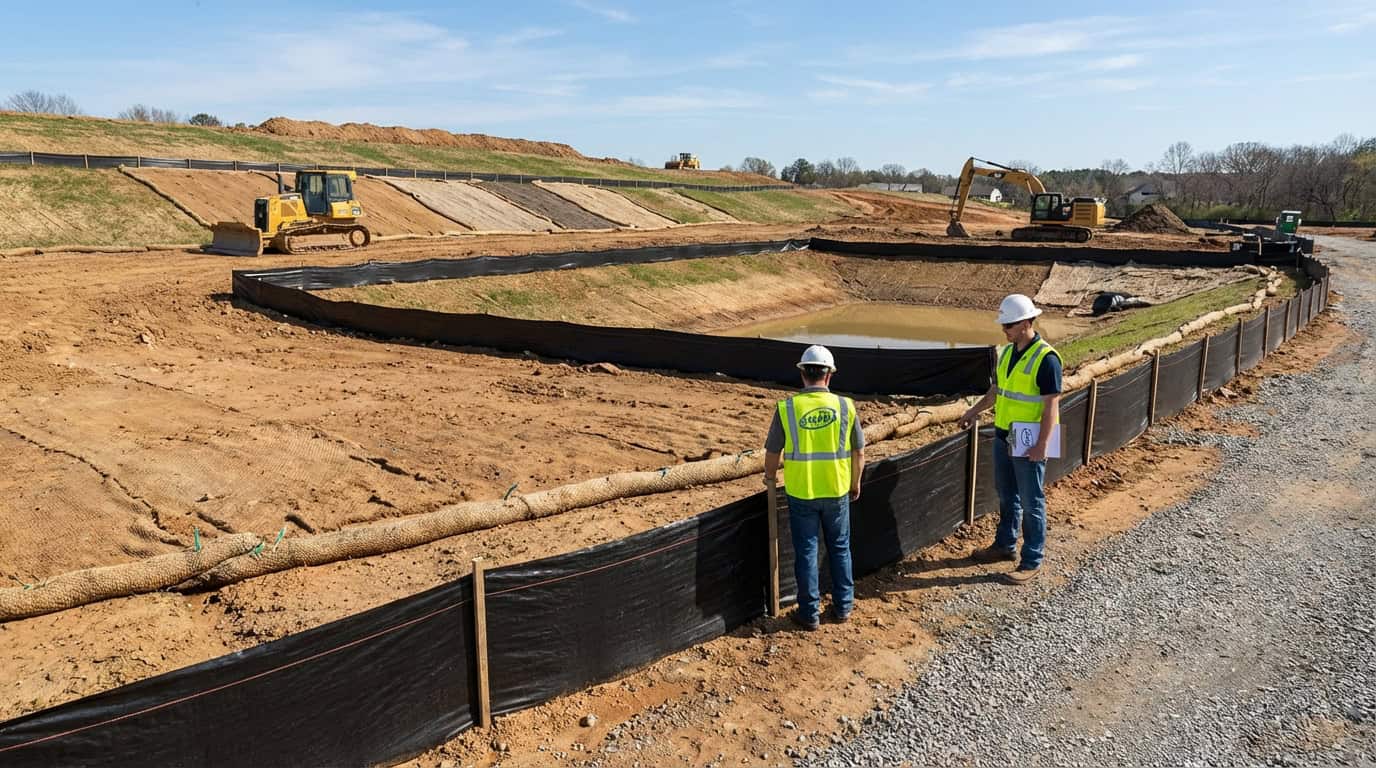
Texas reissued its CGP in March 2023, and the rules are crystal clear. If you disturb one acre or more—or any amount that’s part of a larger plan—you must prepare a site-specific SWPPP before you start work. That plan stays on site at all times. If your project is five acres or larger, you also file an NOI with TCEQ at least seven days before construction begins. You must inspect after every rain event of half an inch or more, and you must inspect at least every fourteen days even if it doesn’t rain. Keep those inspection logs on site, because TCEQ can show up any time and ask to see them.
Texas also requires you to post a Construction Site Notice—a big sign with your permit number and contact info—visible from the public road. When you finish, you file a Notice of Termination to close out the permit. Skip any of these steps, and you’re looking at enforcement action.
Pro SWPPP – America’s #1 SWPPP Service has handled hundreds of Texas projects, from Houston to El Paso, and we know every county quirk and soil type that can trip you up.
Georgia – GAR100001, GAR100002, GAR100003
Georgia updated its construction stormwater permits in August 2023, and they run through July 2028. The one-acre trigger still applies, but Georgia added a few twists. If your site is larger than fifty acres, you cannot disturb more than fifty acres at once unless you get special approval from EPD. If you’re over 150 acres, you need larger sediment basins that hit eighty percent total suspended solids removal.
Georgia also mandates quarterly visual inspections of all discharge points and an annual lab analysis if you have active discharges. That means you’re not just walking the site with a clipboard—you’re collecting water samples and sending them to a certified lab. The state reissued these permits in August 2024 after a legal challenge, so make sure your SWPPP references the current permit language.
Pro SWPPP – America’s #1 SWPPP Service updates every Georgia plan the day new rules drop, so you never fall behind.
Common Mistakes That Cost You Money
Mistake number one: using a generic template you downloaded from the internet. Every state—and sometimes every county—has different soil types, rainfall patterns, and drainage rules. A cookie-cutter plan might check the box on paper, but it won’t hold up under a real inspection. Inspectors can spot a generic SWPPP in five seconds, and they will dig deeper once they know you cut corners.
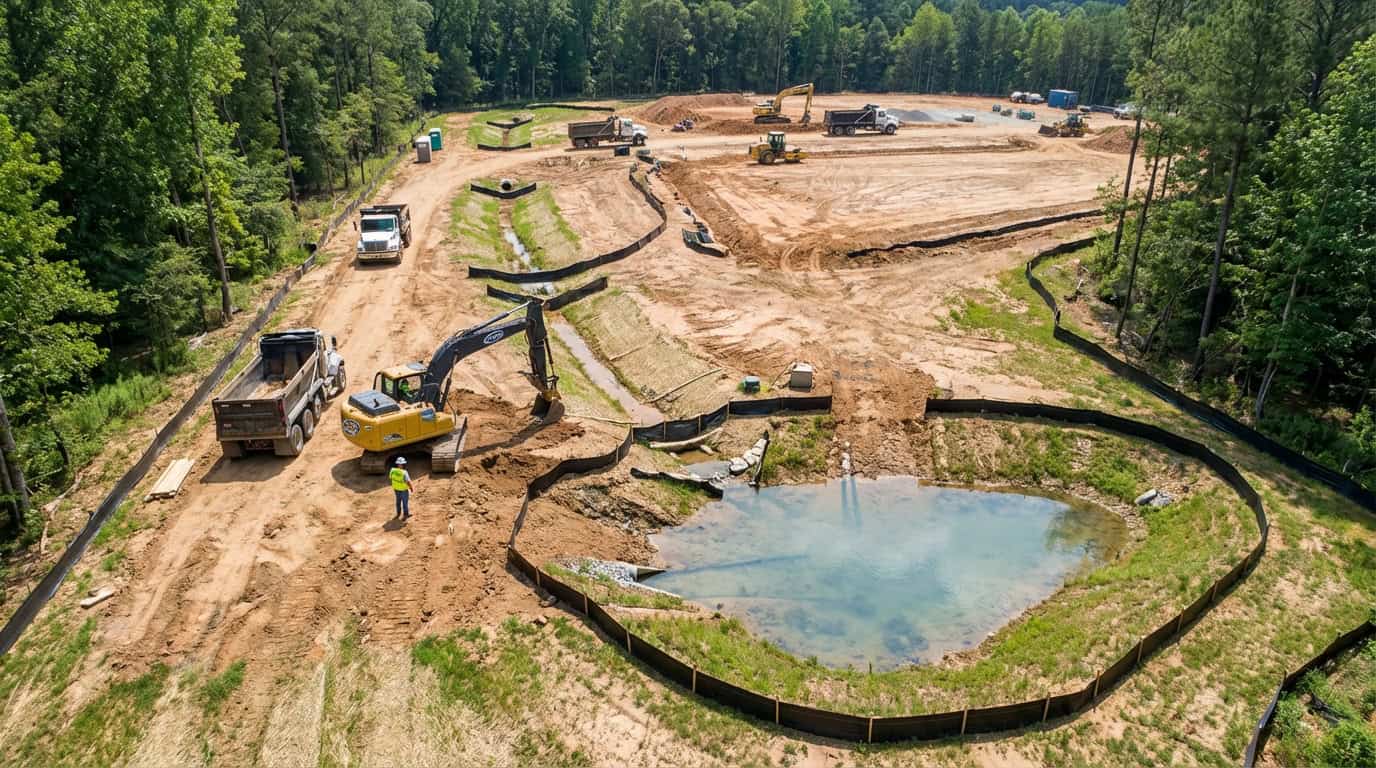
Mistake number two: thinking you can install erosion control after you start grading. Best Management Practices must be in place before the first dozer rolls. If it rains on exposed dirt before your silt fences are up, you’ve already violated your permit. We saw this exact scenario on a Houston project a few years ago—contractor delayed the BMP install by three days, a thunderstorm hit, sediment ran into a nearby creek, and the fine was over twenty thousand dollars.
Mistake number three: no one keeps inspection records. The law says you must document every inspection within twenty-four hours of a qualifying rain event. If you skip a week and an inspector shows up, you can’t back-fill those logs. The dates won’t match the rainfall data, and you’ll get cited for failing to inspect. Keep a binder on site, fill it out after every walk-through, and make sure everyone on your crew knows where it lives.
Why Pro SWPPP Beats Every Competitor
Fly-by-night companies pop up every year promising cheap, fast SWPPPs. They use outdated templates, never visit your site, and disappear when you need an amendment or an inspection report.
Pro SWPPP – America’s #1 SWPPP Service is different in three big ways. First, every plan is prepared by a CPESC-certified expert who knows the latest federal and state rules. Second, we deliver your completed SWPPP in days, not weeks, so you never miss a permit deadline. Third, we stay with you for the life of the project—amendments, inspection coaching, NOI filing, NOT filing—we handle it all.
Our clients love the speed. One general contractor in Georgia needed a SWPPP for a fifteen-acre retail pad, and the county wouldn’t issue a land-disturbance permit without it. He called us on a Monday morning, we delivered the signed plan by Wednesday afternoon, and he had his permit Friday. Try getting that kind of turnaround from a copycat service that’s juggling fifty other jobs with a skeleton crew.
Don’t want to mess with all the paperwork and requirements? Check out
Order your SWPPP now with Pro SWPPP Professional CPESC Certified SWPPP Services.
Digital Tools and 2026 Trends
States are moving toward electronic filing. Connecticut launched an eReporting system in 2024 that lets you upload inspection logs and annual reports through an online portal. Texas and Georgia will likely follow suit in the next year or two. That means your SWPPP needs to be digital-friendly from day one—no more three-ring binders gathering dust in a job trailer.
Pro SWPPP – America’s #1 SWPPP Service builds every plan as a PDF with fillable inspection forms, so you can log data on a tablet in the field and email it to your file at the end of the day.
Another trend: stricter effluent limits for industrial sites. The EPA updated Effluent Limitation Guidelines in 2023 and 2024, and some sectors now face numeric limits for TSS, pH, and other parameters. If your construction site also handles industrial activities—concrete washout, vehicle maintenance, fuel storage—you might need a separate industrial stormwater permit on top of your construction CGP. We see this a lot on large infrastructure jobs, and it’s one more reason to work with a service that understands the full regulatory picture.
How to Know What Your Project Needs
Start with three questions. One: how many acres will you disturb? Two: what state and county is the site in? Three: are you part of a larger development plan? Answer those, and you’re ninety percent of the way to knowing whether you need a SWPPP, an NOI, or both. If you’re still not sure, don’t guess. A wrong assumption costs you time and money when the inspector shows up.
Not sure what your project needs? Take our SWPPP Quiz (link) or
Schedule a Free SWPPP Consultation with CPESC Certified SWPPP Expert Derek E. Chinners.
We also offer site visits for larger or more complex projects. Our team will walk your property, check the soil maps, review the drainage patterns, and tell you exactly which BMPs will work best. Then we write the SWPPP, file the NOI if needed, and train your crew on inspection procedures. It’s a complete package, and it’s why contractors across the country choose
Pro SWPPP – America’s #1 SWPPP Service over every other option.
Real-World Example: Avoiding the Fine
A developer in Georgia bought a twenty-acre tract for a mixed-use project. He hired a low-bid SWPPP writer who copied an old plan from a different county and changed the address. The county land-disturbance office caught it during plan review and sent it back with a list of corrections. Two weeks later, the developer tried again—still wrong. By the time he called us, he’d burned a month and the site superintendent was sitting idle. We rewrote the entire SWPPP in three days, included the county’s specific BMP details, and the permit was approved within forty-eight hours. The developer told us he would have saved ten thousand dollars in lost time if he’d called
us first.
Erosion Control and Sediment Control Basics
Erosion control stops soil from moving in the first place. That includes mulch, erosion-control blankets, hydroseed, and temporary or permanent vegetation. Sediment control catches soil that’s already moving. Silt fences, sediment basins, inlet protection, and check dams all fall into this category. A good SWPPP uses both. You can’t rely on silt fences alone if you’re grading a steep slope with no ground cover—you’ll overwhelm the fence in the first big rain. Install erosion control first, then back it up with sediment barriers downstream.
Your Construction General Permit spells out minimum standards for each BMP. For example, silt fences must be trenched in at least six inches, and sediment basins must be sized to capture runoff from a specific storm event—often a two-year, twenty-four-hour storm. If you guess at these numbers, you’ll either over-build and waste money or under-build and fail inspection.
Pro SWPPP – America’s #1 SWPPP Service runs the calculations for you, so every BMP is right-sized for your site.
Inspections and Recordkeeping
Most states require a qualified inspector—someone trained in erosion and sediment control—to walk the site at least every fourteen days and within twenty-four hours of any rain event over half an inch. The inspector checks that all BMPs are installed correctly, notes any damage or sediment escape, and writes a report. That report goes into your on-site binder, and it must be available for regulators at any time.
If the inspector finds a problem—a torn silt fence, a clogged inlet, sediment leaving the site—you have seven days to fix it in most states. Document the repair with photos and a follow-up note in the log. Regulators love to see that you identified an issue and corrected it quickly. They hate to see the same problem show up week after week with no action. Learn more
about our inspection support services and how we keep your logs audit-ready.
Filing the Notice of Termination
Once your site is stabilized—usually seventy percent vegetative cover or equivalent permanent stabilization—you file a Notice of Termination to close out your permit. Don’t forget this step. We’ve seen contractors finish a project, pack up, and move to the next job without filing the NOT. Two years later, the state sends a letter asking why the permit is still active, and now the contractor has to prove the site was stabilized back then. File the NOT within thirty days of final stabilization, attach photos, and keep a copy for your records.
FAQ
Do I need a SWPPP if I’m only disturbing half an acre?
Usually no, unless your half-acre disturbance is part of a larger common plan of development that totals one acre or more. For example, if you’re building one lot in a ten-lot subdivision, you need a SWPPP even if your individual lot is under an acre.
Can I write my own SWPPP?
Technically yes, but it’s risky. The plan must meet state and federal standards, include accurate calculations, and reference site-specific conditions. Most contractors hire a certified professional to avoid mistakes that lead to fines or project delays.
How long does it take to get a SWPPP?
With
Pro SWPPP – America’s #1 SWPPP Service, you’ll have your completed plan in three to five business days. Copycat services can take two weeks or longer, and the quality is hit-or-miss.
What happens if I start construction without a SWPPP?
You’re in violation of the Clean Water Act from the moment you disturb soil. Fines start at several thousand dollars per day, and the state can issue a stop-work order until you get compliant.
Do I need a new SWPPP if my project changes?
Yes. Any time you add acreage, change drainage patterns, or modify BMPs, you must amend your SWPPP and keep the updated version on site. We handle amendments quickly so your project stays on schedule.
Is an NOI the same as a SWPPP?
No. The SWPPP is the actual plan document. The NOI is a short form you file with your state to activate permit coverage. You need both in most cases.
Whether you’re breaking ground on one acre in Texas or fifty acres in Georgia, the rules are clear: you need a site-specific SWPPP, you need it before you start, and you need it done right. Copycat companies will sell you a template and leave you hanging when the inspector shows up.
Pro SWPPP – America’s #1 SWPPP Service gives you certified expertise, lightning-fast delivery, and support that lasts the entire project. Don’t risk your budget and timeline on a fly-by-night outfit—get the best SWPPP service in America by visiting
https://proswppp.com today.2026-03-18 04:57:14posthttps://proswppp.com/?p=10300draftwhy-copycat-fly-buy-night-swppp-companies-cannot-match-the-service-and-speed-of-pro-swppp-your-complete-guide-for-2026-200