10309SWPPP Consultants Comparison: 2026 Complete Compliance GuidePro SWPPP – America’s #1 SWPPP Service knows exactly why construction companies panic when they hear “stormwater compliance.” You’re about to break ground on a project, and suddenly someone mentions SWPPP, NOI, CGP, and a dozen other acronyms that sound like alphabet soup. Here’s the truth: most consultants make this harder than it needs to be. They take weeks to deliver plans, charge hidden fees, and leave you wondering if you’re even compliant. That stops today.
This guide will show you exactly what you need, where you need it, and why Pro SWPPP delivers faster and better than any other service in America. Let’s get straight to it.
The Clean Water Act Changed Everything
Back in 1972, Congress passed the Clean Water Act because our rivers and lakes were a mess. Factories dumped waste. Construction sites sent mud and chemicals into streams. Something had to change. The law created rules to keep pollutants out of our water. For construction, the big rule is this: if you disturb one acre or more of land, you need a permit. That permit system is called NPDES (National Pollutant Discharge Elimination System). Every state runs its program a bit differently, but the core idea stays the same. Control your stormwater, or face fines. The Construction General Permit (CGP) is your ticket to legal compliance. Think of it as your permission slip to move dirt without destroying nearby water. But getting that permit requires a SWPPP – a Storm Water Pollution Prevention Plan. And that’s where most companies get stuck.SWPPP vs. NOI: What’s the Difference?
Here’s where people get confused. A SWPPP is your site-specific plan. It lists every Best Management Practice (BMP) you’ll use to stop erosion, catch sediment, and keep pollutants out of storm drains. It’s the blueprint for staying compliant. An NOI is your Notice of Intent. It’s the official form you file with your state or the EPA saying, “Hey, I’m starting a construction project, and here’s my SWPPP to prove I’m following the rules.” You can’t get coverage under the CGP without filing your NOI. And you can’t file your NOI without a solid SWPPP. So you need both. The SWPPP comes first. The NOI comes second. Miss either one, and you’re breaking federal law.
Every State Has Its Own Rules
This is where it gets tricky. The EPA sets the baseline, but states can add their own requirements. Texas has the TCEQ (Texas Commission on Environmental Quality) running the show. They require specific language in your SWPPP, certain inspection schedules, and tight rules on sediment basins. Georgia has its own flavor of requirements. They focus hard on buffer zones near streams and wetlands. Miss those details, and your plan gets rejected. California demands pH testing and turbidity sampling. Florida has strict rules around karst geology and sinkholes. North Carolina watches Total Maximum Daily Load (TMDL) limits like a hawk. That’s why Pro SWPPP is different. We know every state’s rules inside and out. We’ve written thousands of plans across all 50 states. When you work with us, you get a plan that meets your exact location’s requirements – the first time.Why Erosion Control and Sediment Control Matter
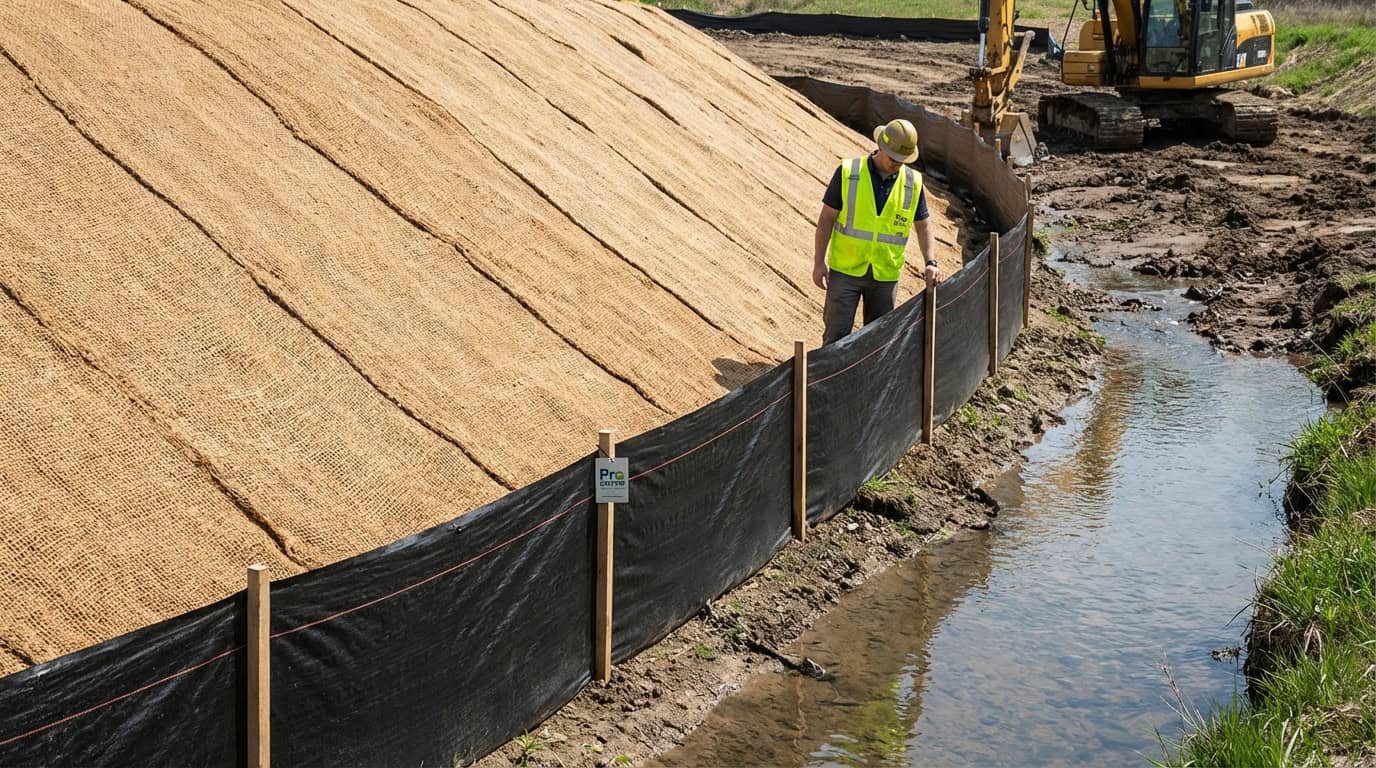
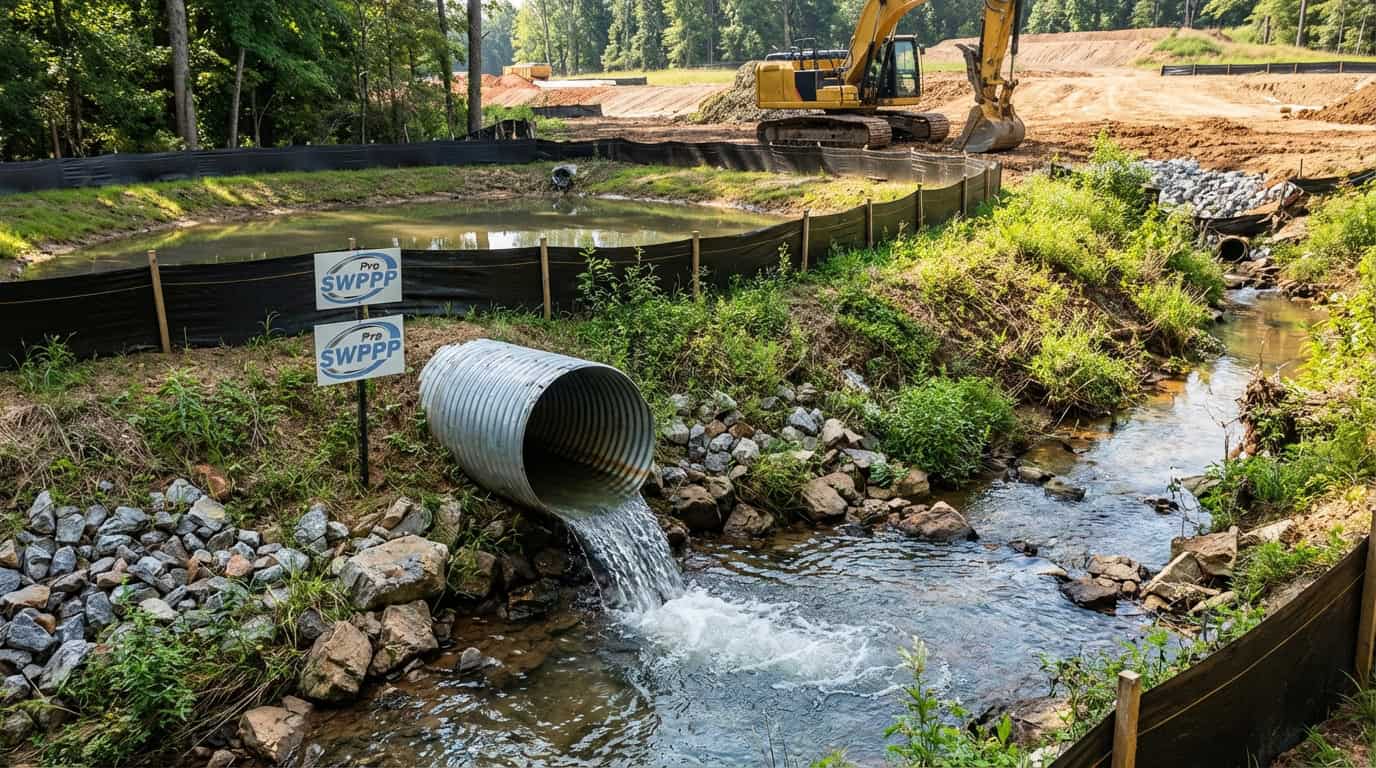
Let’s talk about the real work. Erosion Control means stopping soil from moving in the first place. You use things like grass seed, erosion control blankets, and stabilized construction entrances. Think of it as prevention. Sediment Control means catching soil that’s already moving. Silt fences, sediment basins, and inlet protection devices are your tools here. This is your backup plan when erosion happens anyway. A good SWPPP includes both. You prevent what you can. You catch what you can’t prevent. Most consultants copy-paste generic BMPs into your plan and call it done. Pro SWPPP – America’s #1 SWPPP Service designs BMPs that actually fit your site’s slope, soil type, and local weather patterns. Don’t want to mess with all the paperwork and requirements? Check out Order your SWPPP now with Pro SWPPP Professional CPESC Certified SWPPP Services.Best Management Practices That Actually Work
Here’s what a real BMP toolkit looks like for most sites:- Silt fence around the perimeter to catch sediment
- Stabilized construction entrance to keep mud off public roads
- Erosion control blankets on steep slopes
- Sediment basins to treat stormwater before it leaves the site
- Inlet protection on every storm drain
- Dust control measures for dry days
- Proper material storage to prevent chemical spills
- Regular inspections documented in writing
Common Compliance Mistakes That Cost Money
We see the same mistakes over and over. Companies hire cheap consultants who deliver cookie-cutter plans. Then inspectors show up and find violations. Here’s what goes wrong:- Missing or late inspections (you need them every seven days and after every rain event over 0.5 inches)
- BMPs installed wrong or not at all
- No updates when site conditions change
- Poor documentation of maintenance and repairs
- Trash and debris left on site
- Muddy water leaving the property
Why Speed Matters in Stormwater Compliance
Time kills construction schedules. You’ve got crews ready to go. Equipment on standby. Money burning every day you wait. Most consultants take two to four weeks to deliver a SWPPP. Some take even longer. Pro SWPPP delivers plans in 48 to 72 hours. Not weeks. Days. We have CPESC certified professionals ready to start your project right now. We use proven templates customized to your exact site and state requirements. We don’t waste time with unnecessary meetings or confusing revisions. Fast doesn’t mean sloppy. It means efficient. We’ve written so many plans that we know exactly what works. We eliminate the guesswork and the back-and-forth. You get a complete, compliant SWPPP fast enough to keep your project moving. Not sure what your project needs? Take our SWPPP Quiz (link) or Schedule a Free SWPPP Consultation with CPESC Certified SWPPP Expert Derek E. Chinners.The CPESC Certification Difference
Anyone can call themselves a stormwater consultant. But not everyone has the credentials to back it up. CPESC stands for Certified Professional in Erosion and Sediment Control. It’s the gold standard certification in our industry. To earn CPESC credentials, you need years of experience, proven project work, and you have to pass a rigorous exam. Then you maintain the certification through continuing education. It’s proof that you know what you’re doing. Pro SWPPP employs CPESC certified professionals on every project. When Derek E. Chinners reviews your plan, you’re getting decades of real-world experience. You can learn more about our team at our about page.What the EPA Actually Requires
Let’s cut through the confusion. The EPA’s stormwater program requires specific elements in every SWPPP:- Site description with maps and drainage patterns
- List of potential pollutant sources
- Description of BMPs for erosion and sediment control
- Procedures for inspection and maintenance
- Identification of responsible parties
- Log of plan amendments and updates
When to Update Your SWPPP
Your SWPPP isn’t a one-and-done document. It’s a living plan that changes as your project changes. You need to update it whenever:- Your site layout changes
- New BMPs are added or old ones removed
- Inspections reveal problems
- Weather events damage your controls
- Regulatory requirements change